
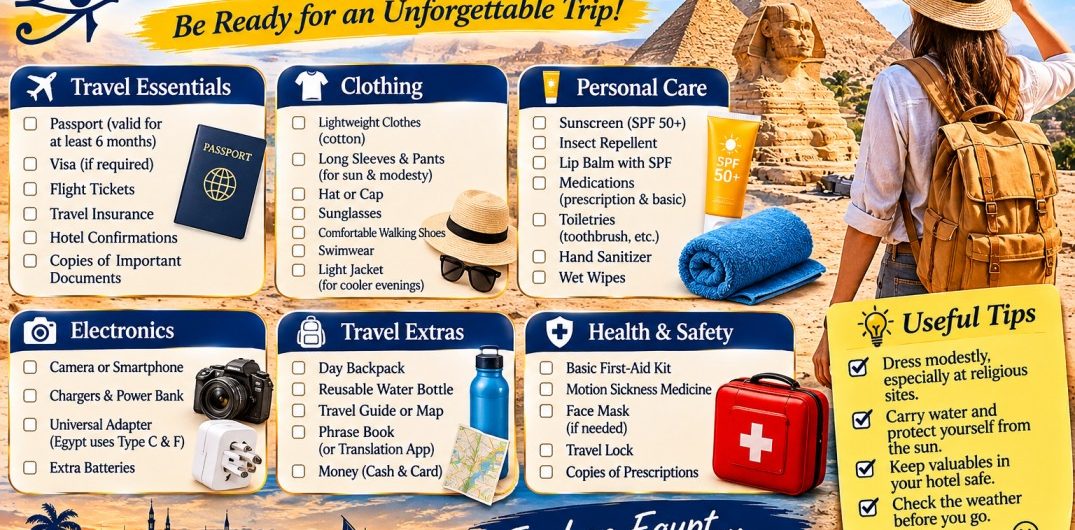
A well-prepared Egypt packing list can make your trip smoother, more comfortable, and far more enjoyable. Egypt is a destination of contrasts: ancient temples and bustling cities, desert heat and cool winter evenings, Nile cruise cabins and Red Sea beaches, archaeological sites with uneven ground and museums with strong air conditioning. The right clothing, footwear, documents, health items, and accessories can help you move through the country with confidence, whether you are visiting the Giza Pyramids Complex, exploring Luxor, sailing on a Nile cruise, or relaxing on the Red Sea coast.
Many travelers assume Egypt is always hot and pack only summer clothes. That can be a mistake. In winter, especially in December, January, and February, evenings can feel cool, early morning temple visits can be chilly, and open decks on a Nile cruise can be windy. In summer, the heat can be intense, particularly in Luxor, Aswan, and desert areas, so breathable fabrics, sun protection, hydration tools, and smart timing become essential. The best Egypt packing list is not a single universal checklist. It is a seasonal, activity-based, and travel-style-based plan.
This guide is written for first-time visitors, returning travelers, families, couples, solo travelers, honeymooners, history lovers, photographers, Nile cruise passengers, Red Sea beach travelers, and anyone who wants to know exactly what to pack for Egypt in 2026. It covers essential clothing, footwear, accessories, documents, health items, electronics, camera gear, money, bags, modesty considerations, seasonal packing, traveler-specific advice, common mistakes, and a practical checklist you can use before departure.
Egypt rewards travelers who are prepared but not overburdened. You want enough comfort to walk through tombs, temples, museums, markets, and river towns without pain or stress. You want enough modesty and flexibility to visit religious sites respectfully. You want enough sun protection to handle bright desert light. And you want enough space in your luggage for souvenirs, books, scarves, small artifacts, and memories—without accidentally packing anything that causes problems at security or customs.
Packing for Egypt is not just about clothes. It is about comfort, respect, sun protection, walking ease, seasonal layers, and being ready for temples, tombs, markets, cruises, beaches, and desert light.
Quick Answer: What Should You Pack for Egypt?
For Egypt, pack lightweight breathable clothing, modest options for religious sites, comfortable walking shoes, a light jacket or sweater for winter evenings, sun protection items such as hat and sunglasses, reusable water bottle, medications, travel documents, power adapter, portable charger, small daypack, tissues, hand sanitizer, and swimwear if visiting hotels, Nile cruises, or Red Sea resorts. Add camera gear, binoculars, scarf, umbrella or rain shell only if needed by season, and secure money storage. The exact packing list depends on the month, itinerary, and travel style: winter requires layers, summer requires heat protection, Nile cruises require relaxed smart-casual clothing, and Red Sea trips require beach and dive gear.
Why an Egypt Packing List Matters More Than You Think
Packing for Egypt is not a minor detail. It affects your physical comfort, your ability to enjoy long sightseeing days, your respect for local customs, and your overall travel mood. A bad shoe choice can turn a magical morning at Karnak Temple into a painful walk. Lack of sun protection can make a midday visit to the Valley of the Kings feel exhausting. Not bringing a light layer can make a winter evening on the Nile uncomfortable. Forgetting tissues or hand sanitizer can create small daily frustrations in restrooms and markets.
Egypt also has a unique blend of environments. In one trip, you may visit a busy Cairo neighborhood, walk across sandy archaeological ground, ride in an air-conditioned vehicle, board a Nile cruise ship, explore a temple with uneven stone floors, enter a mosque or church with modest dress expectations, and finish with a Red Sea beach afternoon. Your luggage needs to support all of these experiences without becoming too heavy.
The goal is not to overpack. It is to pack intelligently. You want clothing that can be layered, shoes that can handle dust and stone, accessories that protect from sun, documents that are secure, and small items that make daily travel easier. A good Egypt packing list helps you feel prepared, mobile, respectful, and comfortable from the pyramids to the philae temple, from Luxor’s west bank to a felucca sunset in Aswan.
Understand Egypt’s Seasons Before You Pack
Egypt’s weather changes enough by season that a single packing list can be misleading. The country is generally dry and sunny, but temperature, wind, evening coolness, and daytime heat vary widely. Before packing, identify your travel months and main activities.
| Season | Months | What to Pack | Why |
|---|---|---|---|
| Winter | December, January, February | Layers, light jacket, sweater, scarf, closed shoes, long sleeves. | Days are mild, but mornings and evenings can be cool, especially on the Nile and in desert areas. |
| Spring | March, April, early May | Breathable clothing, scarf, hat, sunglasses, light rain shell if needed. | Warm days, occasional wind or dust, and stronger sun. |
| Summer | June, July, August | Loose light fabrics, sun hat, UV sunglasses, electrolytes, cooling towel, breathable shoes. | Heat can be intense, especially in Luxor, Aswan, Cairo, and desert regions. |
| Autumn | September, October, November | Summer layers early, light jacket later, comfortable walking shoes. | Weather improves after summer, with excellent light and comfortable sightseeing by late season. |
For broader seasonal advice, see our guides to best time of year to visit Egypt and climate and weather in Egypt.
The Core Egypt Packing List: Essentials for Most Travelers
The following items form the foundation of a practical Egypt packing list for most travelers, regardless of season or itinerary. These are the basics that help you move comfortably through cities, temples, museums, cruises, markets, and beaches.
Clothing Essentials
- Lightweight breathable T-shirts or blouses.
- Long-sleeve shirts for sun protection and modesty.
- Comfortable trousers, jeans, leggings, or modest skirts.
- One or two modest outfits for religious sites.
- Light jacket, cardigan, or fleece for evenings and air-conditioned spaces.
- Scarf, shawl, or pashmina for churches, mosques, wind, sun, or extra warmth.
- Underwear and socks in sufficient quantity.
- Sleepwear.
- Swimsuit for hotel pools, Nile cruises, or Red Sea resorts.
- Smart-casual outfit for nicer dinners or cruise evenings.
Footwear Essentials
- Comfortable broken-in walking shoes or sneakers.
- Sandals or closed-toe shoes for hot days, depending on comfort and site conditions.
- Light shoes for hotel or cruise evenings.
- Water shoes or reef shoes if visiting Red Sea beaches or rocky entries.
Footwear is one of the most important parts of your Egypt packing list. Archaeological sites often involve sand, gravel, uneven stone, steps, dust, and heat. Flip-flops may be fine at a resort, but they are usually not ideal for long temple days. The best shoes are supportive, breathable, and already tested before travel.
Sun and Weather Protection
- Wide-brim hat or cap.
- UV-protection sunglasses.
- High SPF sunscreen.
- Lip balm with SPF.
- Aloe gel or after-sun lotion.
- Light umbrella or compact rain shell for winter or spring showers.
- Neck gaiter or scarf for wind and dust.
Health and Comfort Items
- Personal medications.
- Basic first-aid kit.
- Pain relievers.
- Anti-diarrheal medication.
- Rehydration salts or electrolyte packets.
- Motion sickness tablets if needed.
- Hand sanitizer.
- Tissues or wet wipes.
- Face masks for dusty sites or crowded transport if preferred.
- Small sewing kit.
- Earplugs and eye mask for light sleepers.
Documents and Money
- Passport with valid expiry.
- Visa or e-visa confirmation if required.
- Travel insurance details.
- Flight and hotel confirmations.
- Nile cruise vouchers.
- Emergency contact list.
- Copies or digital scans of important documents.
- Credit cards and debit cards.
- Some Egyptian pounds or US dollars for small expenses.
- Money belt or secure wallet.
Electronics
- Smartphone.
- Power adapter, usually Type C or Type F plug compatibility depending on origin.
- Portable charger or power bank.
- Charging cables.
- Headphones.
- Camera or action camera.
- Extra batteries and memory cards.
- eSIM or local SIM plan if needed.
- Offline maps downloaded in advance.
Bag and Luggage Choices
- Lightweight suitcase or travel bag.
- Small daypack for site visits.
- Foldable tote for souvenirs.
- Packing cubes to organize clothing.
- Luggage tags with contact information.
- Locks for zippers if desired.
What to Pack for Egypt by Region and Activity
Egypt is not one single travel environment. Your packing should change depending on whether you are spending time in Cairo, Luxor, Aswan, a Nile cruise, a Red Sea resort, desert oasis, or mountain monastery. The following regional guide helps you refine your list.
Cairo and Giza
Cairo is busy, historic, traffic-heavy, and full of contrasts. You may visit the pyramids, museums, Islamic Cairo, Coptic Cairo, the Citadel, Khan el-Khalili, and restaurants along the Nile. Comfortable walking shoes are essential, as is a small daypack for water, sunscreen, tissues, and camera gear. A scarf can be useful for mosques and windy days. Keep valuables secure in crowded markets and tourist areas.
- Comfortable closed shoes.
- Light jacket for winter evenings.
- Scarf or shawl.
- Secure bag or money belt.
- Sun protection for pyramid visits.
- Tissues and hand sanitizer.
Luxor and the West Bank
Luxor is one of the most historically intense destinations in the world. You may visit Karnak Temple, Luxor Temple, the Valley of the Kings, the Mortuary Temple of Hatshepsut, Medinet Habu, and the Colossi of Memnon. The terrain can be sandy, dusty, uneven, and exposed. Early morning visits are often the most comfortable.
- Breathable walking shoes.
- Hat and sunglasses.
- Sunscreen and lip balm.
- Reusable water bottle.
- Light scarf for dust or sun.
- Small flashlight or phone light for tombs if allowed.
- Compact umbrella or light layer for winter mornings.
Aswan and Philae
Aswan is more relaxed and scenic, with feluccas, islands, Nubian villages, the Temple of Philae, High Dam, and access to Abu Simbel. The heat can be stronger than in Luxor in some seasons, but the river breeze helps. Comfortable sandals or walking shoes are useful, and a light layer is helpful for evening boat rides.
- Light breathable clothing.
- Comfortable shoes for temple grounds.
- Scarf for sun or wind.
- Swimsuit if hotel has pool access.
- Camera for felucca sunsets.
- Small bag for boat trips.
Nile Cruise
A Nile cruise requires a mix of casual sightseeing clothing, modest layering, and smart-casual evening wear. Days are spent exploring temples and tombs, while evenings may include dinner, entertainment, or quiet time on deck. Cabins can be air-conditioned, and open decks can feel breezy at night.
- Comfortable daytime clothes.
- Light jacket or sweater for evenings.
- Scarf for deck wind.
- Swimsuit for pool use.
- Smart-casual dinner outfit.
- Compact daypack for excursions.
- Sun protection for shore visits.
- Binoculars for river scenery if desired.
For cruise-specific planning, see our guides to Nile cruise cost, best time for a Nile cruise, and best Egypt cruises.
Red Sea Resorts
Red Sea destinations such as Hurghada, Sharm El Sheikh, Marsa Alam, and El Gouna require beach and water gear. Even in winter, days can be sunny, though wind can be noticeable. If diving or snorkeling, consider reef-safe sunscreen, rash guard, and appropriate thermal protection.
- Swimsuits.
- Cover-up or beach dress.
- Sandals or water shoes.
- Snorkel mask if preferred.
- Rash guard for sun or diving.
- Reef-safe sunscreen.
- Light windbreaker for winter breezes.
- Dry bag for boat trips.
Desert, Oasis, and Adventure Travel
If your trip includes Siwa, White Desert, Red Desert, camping, 4×4 safari, or mountain hiking, you need more serious layering and protection. Desert nights can be cold even when days are warm. Dust, wind, sun, and uneven terrain all matter.
- Warm jacket or fleece.
- Thermal base layers for winter camping.
- Closed hiking shoes or boots.
- Headlamp.
- Dust scarf or face covering.
- Strong sunscreen and lip balm.
- Insulated water bottle.
- Power bank.
- Small first-aid kit.
What to Wear in Egypt: Modesty, Comfort, and Cultural Respect
Egypt is a predominantly Muslim country with a significant Coptic Christian minority. Dress codes are not as strict as in some Gulf destinations, but modesty is appreciated, especially outside tourist resorts, in rural areas, religious sites, mosques, churches, and local neighborhoods. The goal is not to hide completely, but to dress respectfully and comfortably.
For women, lightweight long sleeves, loose trousers, midi skirts, maxi dresses, and scarves can be practical and elegant. For men, shorts are generally acceptable in tourist areas, but very short shorts may draw attention in conservative settings. Collared shirts, chinos, jeans, and modest T-shirts work well. At beaches and resorts, swimwear is normal, but cover-ups are appropriate when leaving pool or beach areas.
When visiting mosques, women may need to cover hair, arms, and legs. A scarf is one of the most useful items in your Egypt packing list because it can serve multiple purposes: religious sites, sun protection, wind, dust, evening warmth, and modest layering. When visiting Coptic churches, modest dress and quiet behavior are important, especially during services or holiday periods such as Coptic Christmas.
Best Clothing Fabrics for Egypt
Fabric choice matters as much as clothing style. Egypt’s dry heat, strong sun, dust, and occasional wind can make synthetic, heavy, or non-breathable clothing uncomfortable. Natural fibers and technical lightweight fabrics often work best.
| Fabric | Why It Works | Best Uses |
|---|---|---|
| Cotton | Breathable, soft, easy to find, good for casual wear. | T-shirts, shirts, trousers, dresses. |
| Linen | Very breathable and stylish, though it wrinkles easily. | Summer shirts, trousers, dresses, resort wear. |
| Merino wool | Lightweight warmth, odor resistance, good for layering. | Winter travel, hiking, cruise evenings. |
| Technical synthetics | Moisture-wicking and quick-drying. | Hot weather, active travel, Red Sea, desert trekking. |
| Rayon/viscose | Light and flowy, but can wrinkle. | Dresses, blouses, casual warm-weather wear. |
Avoid heavy denim for long temple days unless you are traveling in cool winter and can tolerate thicker fabric. Dark colors can absorb heat. Light and neutral colors are usually more comfortable, though they may show dust more easily.
Footwear Guide: The Most Important Part of Your Egypt Packing List
If you only upgrade one category of your packing list, make it footwear. Egypt’s archaeological sites can be rough on feet. You may walk on sand, gravel, ancient stone, uneven tomb floors, temple pathways, market streets, and airport terminals. The wrong shoes can cause blisters, ankle strain, or heat discomfort.
Best Shoes for Temples and Tombs
- Broken-in walking sneakers with good arch support.
- Light hiking shoes for dusty or uneven terrain.
- Breathable shoes for summer.
- Closed shoes for winter if mornings are cool.
Best Shoes for Cities and Markets
- Comfortable slip-on walking shoes.
- Secure sandals with support if you prefer open footwear.
- Avoid expensive fashion shoes in dusty or crowded areas.
Best Shoes for Nile Cruises and Resorts
- Light casual shoes for dinners.
- Sandals for pool decks.
- Water shoes for rocky Red Sea entries.
Bring moisture-wicking socks if you sweat heavily, and consider blister plasters. Even comfortable shoes can fail in hot dusty conditions if socks are poor.
Packing List for Egypt by Traveler Type
Different travelers need different things. A solo backpacker, a family with children, a honeymoon couple, and a history-focused traveler will not pack identically. The following lists help you personalize your Egypt packing strategy.
First-Time Visitor Packing List
- Comfortable walking shoes.
- Modest clothing for religious sites.
- Light jacket or scarf.
- Sun protection kit.
- Reusable water bottle.
- Small daypack.
- Documents and backups.
- Travel adapter and power bank.
- Basic medications.
- Camera or smartphone with storage.
Family Packing List
- Extra snacks for children.
- Wet wipes and tissues.
- Sun hats for kids.
- Child sunscreen.
- Comfortable shoes for every family member.
- Swimsuits for hotel pools and Red Sea stops.
- Light jackets for evenings.
- First-aid kit with children’s medications.
- Small toys, books, or devices for travel days.
- Portable fan or cooling towel for summer.
For family planning, see our guide to Egypt with kids.
Couple and Honeymoon Packing List
- Smart-casual outfits for dinners.
- Light layers for Nile cruise evenings.
- Swimwear for resorts and pools.
- Camera or phone tripod for couple photos.
- Scarf or shawl for romantic sunset shots.
- Comfortable shoes for temple walks.
- Small backpack for day excursions.
- Travel-size toiletries and fragrance.
- Reusable water bottles.
For romantic route ideas, see our Egypt honeymoon itinerary guide.
Solo Traveler Packing List
- Light luggage to move easily.
- Secure money belt or anti-theft bag.
- Portable charger.
- Headphones for transit.
- Comfortable shoes.
- Modest versatile clothing.
- Digital document copies.
- Small first-aid kit.
- Door lock or portable security item if desired.
For solo advice, see our solo female travel Egypt guide.
History Lover Packing List
- Notebook or journal.
- Pen.
- Binoculars for reliefs and distant details.
- Camera with zoom lens.
- Comfortable shoes for long temple days.
- Sun hat and scarf.
- Water bottle.
- Offline maps and guidebooks.
- Small flashlight if permitted.
History lovers may also benefit from reading about Symbols of Ancient Egypt, Egyptian Gods Family Tree, Hatshepsut, Queen Nefertiti, Queen Nefertari, and King Khufu before visiting temples and tombs.
Photographer Packing List
- Camera body.
- Wide-angle lens for temples.
- Telephoto lens for details.
- Extra batteries.
- Memory cards.
- Travel tripod or monopod if allowed.
- Lens cloth and blower.
- Rain cover or dust protection.
- Comfortable camera strap.
- Power bank.
Photographers should remember that some tombs, museums, and religious sites restrict flash, tripods, or commercial equipment. Always follow posted rules and guide instructions.
Seasonal Egypt Packing Lists
Winter Egypt Packing List: December to February
Winter is one of the best seasons for sightseeing, but it is not tropical warm every hour. Days can be pleasant, while mornings, evenings, Nile decks, and desert areas can feel cool. Layering is the key.
- Light jacket or fleece.
- Sweater or cardigan.
- Long-sleeve shirts.
- Scarf or shawl.
- Comfortable closed shoes.
- Sunglasses and sunscreen, because winter sun can still be strong.
- Lip balm.
- Light gloves for early morning desert trips if needed.
- Swimsuit for hotel pools or cruise use.
Spring Egypt Packing List: March to May
Spring can be warm and sometimes windy. Occasional dust or sand can appear, especially in desert and Upper Egypt areas. Breathable clothing and sun protection are important.
- Light breathable shirts.
- Trousers or modest skirts.
- Scarf for dust and sun.
- Hat and sunglasses.
- Comfortable walking shoes.
- Light rain shell if forecast suggests showers.
- Sunscreen and lip balm.
- Swimsuit for pools and resorts.
Summer Egypt Packing List: June to August
Summer requires heat management. Luxor, Aswan, Cairo, and desert areas can be very hot. Clothing should be loose, light, breathable, and protective. Hydration and sun safety are essential.
- Loose cotton or linen clothing.
- Wide-brim hat.
- UV sunglasses.
- High SPF sunscreen.
- Reusable water bottle.
- Electrolyte packets.
- Cooling towel or portable fan.
- Breathable shoes.
- Light scarf for sun or dust.
- Swimwear for hotel pools and Red Sea stops.
Autumn Egypt Packing List: September to November
Autumn transitions from warm to mild. Early autumn can still be hot, while late October and November can feel excellent for sightseeing. Pack layers and be ready for changing daytime comfort.
- Light summer clothes.
- Cardigan or light jacket.
- Scarf.
- Comfortable walking shoes.
- Sun protection.
- Swimsuit.
- Camera gear for golden light.
Documents to Pack for Egypt
Documents are one of the most important parts of your Egypt packing list. Missing paperwork can create stress, delays, or denied boarding. Always check official requirements before travel because rules can change.
- Passport with sufficient validity.
- Visa or e-visa confirmation if required.
- Return or onward flight details.
- Hotel and cruise confirmations.
- Travel insurance policy.
- Emergency contacts.
- Copies of passport and visa.
- Digital backups stored securely.
- Driver’s license if renting a vehicle, though self-driving in Egypt is not recommended for most tourists.
- Medical documentation for prescriptions or devices.
Keep physical and digital copies separate. If your passport is lost, having scans and emergency contact details can make recovery easier.
Health Items to Pack for Egypt
Egypt is generally safe for healthy travelers, but heat, dust, long walking days, changed diet, and travel fatigue can affect comfort. A simple health kit can prevent small problems from becoming major disruptions.
Essential Health Kit
- Prescription medications in original packaging.
- Pain relievers.
- Fever reducer.
- Anti-diarrheal medicine.
- Oral rehydration salts.
- Antacid.
- Allergy medication.
- Blister plasters.
- Adhesive bandages.
- Antiseptic wipes.
- Hand sanitizer.
- Insect repellent if needed for evening or rural areas.
- Sunscreen and after-sun gel.
- Eye drops for dust or dryness.
If you have medical conditions, consult your doctor before travel. Heat can affect blood pressure, diabetes, heart conditions, and mobility. Travel insurance is strongly recommended.
Electronics and Tech Packing List for Egypt
Technology can make Egypt travel easier: offline maps, translation tools, digital tickets, ride confirmations, camera storage, and communication with guides or drivers. But electronics should be packed carefully because heat, dust, and travel movement can affect devices.
- Smartphone.
- Power bank with sufficient capacity.
- Travel adapter.
- Multi-port charger.
- Charging cables.
- Headphones.
- Camera.
- Extra batteries.
- Memory cards.
- eSIM or local SIM plan.
- Portable fan for summer.
- Small flashlight or headlamp.
Download offline maps, translation apps, itinerary PDFs, and important confirmations before arrival. Internet can be good in hotels and cities, but remote sites, boats, and deserts may have weaker signal.
Money, Payments, and Security Items
Egypt uses the Egyptian pound, and cash is useful for small purchases, tips, markets, local transport, and site vendors. Cards are accepted in many hotels, restaurants, museums, and larger shops, but not everywhere. A balanced money strategy is best.
- Credit and debit cards.
- Some Egyptian pounds for small expenses.
- Backup US dollars or euros if useful for exchange.
- Money belt or hidden pouch.
- Small secure wallet.
- RFID-blocking wallet if preferred.
- Coin organizer.
- Receipt folder for expenses.
Notify your bank before travel, use ATMs in secure locations, and avoid carrying all cash in one place. For tipping etiquette, see our guide to tipping in Egypt.
Souvenir and Shopping Considerations
Many travelers want to bring home souvenirs from Egypt: scarves, spices, perfumes, ceramics, alabaster items, jewelry, papyrus art, textiles, and small decorative objects. Leave space in your luggage, but be careful. Never buy or transport suspected antiquities. Authentic ancient artifacts are protected by law, and attempting to export them can lead to serious legal consequences.
- Foldable tote bag.
- Bubble wrap or soft clothing for fragile items.
- Extra empty suitcase if planning major shopping.
- Receipts for valuable purchases.
- Research on legal souvenir rules before buying.
If buying papyrus, ask whether it is genuine papyrus or paper. If buying stones or carvings, ensure they are modern reproductions and legally exportable. Shopping responsibly protects both your trip and Egypt’s heritage.
What Not to Pack for Egypt
Just as important as what to bring is what to avoid. Overpacking can make travel harder, especially when moving between hotels, cruise ships, airports, and archaeological sites.
- Heavy boots unless doing serious desert hiking.
- Too many pairs of shoes.
- Excessive formal clothing.
- Large hard-shell suitcase if you can travel lighter.
- Valuable jewelry that may draw attention.
- Drone without checking legal restrictions.
- Suspicious antiquities or unlicensed artifacts.
- Heavy winter gear unless traveling to very cold desert camps.
- Too many toiletries that can be bought locally.
Drones, in particular, can be legally sensitive in Egypt. Check current regulations before bringing one. In many cases, it is safer to leave drones at home unless you have confirmed official permission.
Sample 7-Day Egypt Packing List
This sample list works for a classic 7-day itinerary involving Cairo, Luxor, and possibly Aswan or a short Nile cruise. Adjust for season and personal comfort.
| Category | Quantity or Items |
|---|---|
| Tops | 5 to 7 shirts, including some long sleeves. |
| Bottoms | 3 to 4 trousers, skirts, or modest shorts. |
| Outer layer | 1 light jacket or cardigan. |
| Scarf | 1 versatile scarf or shawl. |
| Shoes | 2 pairs: walking shoes and sandals/light shoes. |
| Underwear/socks | 7 sets. |
| Sleepwear | 1 to 2 sets. |
| Swimwear | 1 swimsuit. |
| Day bag | 1 small backpack or crossbody bag. |
| Tech | Phone, charger, power bank, adapter, camera if desired. |
| Health kit | Medications, sanitizer, tissues, blister plasters, sunscreen. |
| Documents | Passport, visa, insurance, confirmations, copies. |
Sample 10-Day Egypt Packing List
A 10-day Egypt trip may include Cairo, Luxor, Aswan, Nile cruise, Abu Simbel, and Red Sea extension. You can reuse clothing with laundry, but plan for slightly more variety and comfort.
- 7 to 10 tops.
- 4 to 5 bottoms.
- 1 dress or smarter outfit for evenings.
- 1 light jacket.
- 1 scarf.
- 2 pairs of shoes.
- Swimsuit.
- Daypack.
- Packing cubes.
- Full tech kit.
- Health kit.
- Document folder.
- Laundry bag.
- Foldable souvenir bag.
For route planning, see our 10 day Egypt itinerary guide.
Packing List for a Nile Cruise
A Nile cruise has its own rhythm. You will spend days exploring temples and evenings onboard. Cabins are compact, laundry may be available, and deck time can be breezy. The key is to pack versatile clothing and a small excursion bag.
- Comfortable daytime sightseeing clothes.
- Light sweater or jacket for evenings.
- Scarf for deck wind.
- Smart-casual dinner outfit.
- Swimsuit.
- Sandals for pool deck.
- Walking shoes for excursions.
- Small daypack.
- Sun protection.
- Camera or binoculars.
- Reusable water bottle.
- Tissues and sanitizer.
For cruise planning, see our guides to Nile cruise itinerary, Nile cruise cost, and best time for a Nile cruise.
Packing List for Red Sea Beach Holidays
If your Egypt trip includes Hurghada, Sharm El Sheikh, Marsa Alam, or El Gouna, add beach and water items. Even in winter, the sea can be enjoyable, though wind and cooler water may require extra layers or a wetsuit for diving.
- Multiple swimsuits.
- Cover-up or beach dress.
- Sun hat and sunglasses.
- Reef-safe sunscreen.
- Water shoes.
- Snorkel mask if preferred.
- Rash guard.
- Light windbreaker.
- Dry bag for boat trips.
- After-sun lotion.
Packing List for Families with Children
Traveling with children in Egypt can be wonderful, but packing should focus on comfort, sun protection, snacks, hydration, and flexibility. Children may get tired faster in heat or on long walking days.
- Extra clothing for each child.
- Comfortable shoes.
- Sun hats.
- Child-safe sunscreen.
- Reusable water bottles.
- Snacks.
- Wet wipes.
- Tissues.
- Light jackets.
- Swimsuits.
- Entertainment for flights and transfers.
- Basic medications approved by your pediatrician.
- Small first-aid kit.
Packing List for Older Travelers and Mobility Needs
Older travelers and those with mobility considerations should pack for comfort, stability, and ease. Egypt’s ancient sites can involve uneven ground, steps, sand, heat, and long walking distances. Good preparation can make a major difference.
- Supportive walking shoes.
- Walking stick or trekking pole if useful.
- Lightweight day bag with water.
- Medications in original packaging.
- Medical summary card.
- Sun hat and scarf.
- Electrolytes.
- Comfortable layers.
- Portable seat cushion if needed.
- Any required mobility aids, checked with airline and tour operator.
For accessibility planning, see our guide on whether Egypt is wheelchair friendly.
Packing List for Solo Female Travelers
Solo female travelers can enjoy Egypt greatly with thoughtful packing and planning. Comfort, security, modesty, and flexibility are key. Choose clothing that helps you feel confident and adaptable across cities, temples, cruises, and resorts.
- Comfortable modest clothing.
- Scarf or shawl.
- Secure crossbody bag.
- Money belt.
- Portable door lock or security wedge if desired.
- Phone power bank.
- Head torch or small flashlight.
- Comfortable shoes.
- Health kit.
- Copies of documents.
For practical advice, see our solo female travel Egypt guide.
Packing List for Christmas or New Year Egypt Trips
A Christmas or New Year Egypt trip can be festive and comfortable, but weather and holiday schedules should influence packing. Days are usually mild, evenings cool, and tourist areas busy.
- Layers for cool evenings.
- Smart-casual outfits for festive dinners.
- Comfortable shoes for busy sightseeing days.
- Scarf for Nile decks and winter wind.
- Swimsuit for hotel pools or cruise facilities.
- Gift or small items for children if traveling during holidays.
- Planner or itinerary folder for booked festive events.
For holiday planning, see our guide to Christmas vacation in Egypt.
Common Egypt Packing Mistakes
One common mistake is packing only for heat. Egypt’s winter evenings can be cool, especially on the Nile, in desert camps, or during early morning flights to Abu Simbel. Layers are important.
Another mistake is bringing new shoes. Broken-in footwear is essential. Blisters can ruin a temple day faster than almost anything else.
Some travelers forget tissues. Public restrooms at sites may not always provide paper, and a small pack of tissues can be surprisingly useful.
Overpacking is another frequent error. Egypt involves moving between airports, hotels, ships, vehicles, and sites. A lighter bag is usually better.
Ignoring modesty needs can create discomfort at religious sites. A scarf and loose layering piece can solve many situations.
Finally, many travelers forget hydration tools. A reusable water bottle, electrolytes, and sun protection can make long sightseeing days much easier.
Practical Packing Tips for Egypt
- Use packing cubes to separate dirty and clean clothes.
- Roll soft clothing to save space.
- Keep one daypack always ready for excursions.
- Store passports and backups separately.
- Carry small bills for tips and markets.
- Keep tissues and sanitizer accessible.
- Pack a spare shirt in your daybag for hot days.
- Use a foldable bag for souvenirs.
- Check airline baggage rules before packing liquids.
- Leave space for purchases, but do not assume everything is legal to export.
Egypt Packing List by Itinerary Type
| Itinerary Type | Key Packing Focus | Essential Extras |
|---|---|---|
| Cairo and pyramids | Comfortable shoes, sun protection, secure bag. | Scarf, tissues, water bottle, camera. |
| Luxor temples and tombs | Breathable clothing, strong shoes, hydration. | Hat, sunscreen, notebook, binoculars. |
| Nile cruise | Layering, smart-casual evenings, swimwear. | Scarf, daypack, camera, power bank. |
| Aswan and felucca | Light clothing, sun protection, modest layers. | Scarf, camera, swimwear, dry bag. |
| Red Sea resort | Swimwear, reef shoes, sunscreen, wind layer. | Snorkel gear, rash guard, dry bag. |
| Desert or Siwa | Warm layers, closed shoes, dust protection. | Headlamp, insulated bottle, power bank. |
| Diving liveaboard | Dive gear, rash guards, seasickness aids. | Underwater camera, dry bag, logbook. |
How to Pack for Egypt’s Dust, Sand, and Heat
Egypt’s environment can be dry, dusty, and sunny for long stretches. Even if the temperature feels comfortable, dust and sun can affect comfort. Pack items that help you manage these conditions without overcomplicating your luggage.
- Use zippered bags for electronics.
- Keep a microfiber cloth for lenses and screens.
- Carry tissues or wet wipes.
- Use a scarf to cover neck or face in windy areas.
- Choose shoes that can handle dust and sand.
- Pack sunscreen that is easy to reapply.
- Bring a hat with a brim for better shade.
- Keep hydration accessible at all times.
What to Bring for Religious Sites in Egypt
Egypt contains mosques, churches, synagogues in some historic areas, and sacred spaces connected to Coptic Christianity. Respectful dress and behavior matter. A scarf, long sleeves, and modest trousers or skirts can make visits smoother.
- Scarf or shawl for women.
- Long sleeves or layering top.
- Trousers, maxi skirt, or modest dress.
- Slip-on shoes if removing footwear is required.
- Quiet phone setting.
- Respectful attitude toward worship and photography rules.
If visiting Coptic churches around Christmas or Epiphany, remember that these are active worship spaces. Dress modestly, avoid disruptive photos, and follow guidance from local staff or your guide.
Packing for Photography in Egypt
Egypt is one of the world’s most photogenic destinations. From the pyramids at sunrise to temple reliefs, Nile sunsets, market scenes, feluccas, and Red Sea light, photography can become a major part of the trip. But packing for photos requires balance.
- Lightweight camera or high-quality smartphone.
- Extra batteries, because heat and frequent use can drain power.
- Memory cards with enough storage.
- Lens cleaning cloth.
- Small tripod if allowed.
- Comfortable camera strap.
- Dust protection for lenses.
- Portable charger.
Always check site rules. Some tombs and museums restrict flash, tripods, or commercial photography. Respect guides, guards, and local people when taking images.
Packing for Long Temple Days
Temple days in Luxor, Edfu, Kom Ombo, Philae, or Abu Simbel can involve walking, heat, dust, security checks, and long explanations. Your daypack should support comfort without slowing you down.
Ideal Daypack Contents
- Water bottle.
- Sunscreen.
- Hat or cap.
- Sunglasses.
- Scarf.
- Tissues.
- Hand sanitizer.
- Small snack.
- Phone and power bank.
- Camera if desired.
- Tickets or passport copy if required.
- Guide contact details.
How to Choose Between Carry-On and Checked Luggage for Egypt
For many Egypt trips, a carry-on-sized bag plus a small daypack is enough, especially for 7 to 10 days if laundry is available. Checked luggage can be useful for families, long trips, photographers with gear, or travelers planning to shop.
Choose Carry-On If You Want:
- Easier movement through airports and hotels.
- Less waiting for baggage.
- Lower risk of lost luggage.
- Simplicity on Nile cruises and domestic flights.
Choose Checked Luggage If You Need:
- More clothing for families.
- Camera equipment.
- Diving gear.
- Mobility items.
- Space for souvenirs.
Domestic flights in Egypt may have baggage limits, so check airline rules before packing heavy or oversized items.
Packing for Domestic Flights and Transfers
Egypt itineraries often include domestic flights between Cairo, Luxor, Aswan, Hurghada, Sharm El Sheikh, and Abu Simbel. Packing should account for airport security, vehicle transfers, and limited cabin space.
- Keep documents accessible.
- Carry medications in hand luggage.
- Pack chargers and power banks properly.
- Avoid overly heavy bags for easier transfers.
- Keep one change of clothes in case luggage is delayed.
- Bring water bottle empty through security if needed.
For flight planning, see our guide to airports in Egypt.
Packing for Abu Simbel
Abu Simbel is one of Egypt’s most spectacular monument visits, usually reached by early morning flight from Aswan. Because the day can begin very early and involve travel, security, heat, and open-air temple viewing, packing should be practical.
- Light jacket for early morning.
- Comfortable shoes.
- Sun hat and sunglasses.
- Water bottle.
- Camera or phone with storage.
- Small snack.
- Passport or copy if required.
- Tissues and sanitizer.
For more on the site, see our guide to the Temples of Abu Simbel.
Packing for Luxor Hot Air Balloon Rides
A hot air balloon ride over Luxor is magical, but it usually begins before sunrise and can be cool in the air. Layers, secure clothing, and minimal bulky items are best.
- Light jacket or sweater.
- Closed shoes.
- Hat or cap.
- Camera with strap.
- Small bag only if allowed.
- Sunglasses.
- Layers for changing temperature.
Balloon operations depend on weather, so keep flexibility in your schedule.
Packing for Egyptian Markets and Khan el-Khalili
Markets are colorful, crowded, and full of sensory energy. They are also places where pickpocketing or aggressive sales tactics can occur. Pack for security and comfort.
- Secure crossbody bag worn in front.
- Money belt or hidden wallet.
- Small bills for purchases.
- Comfortable shoes for walking.
- Foldable bag for purchases.
- Patience and polite confidence.
For scam avoidance, see our guide to tourist scams in Egypt.
Packing for Egyptian Food and Dining
Egyptian food is a major part of the travel experience. You may eat hotel buffets, cruise meals, local restaurants, street food, seafood, and festive holiday dinners. Pack items that support comfort and dietary needs.
- Stomach medication if needed.
- Electrolytes.
- Hand sanitizer.
- Tissues.
- Any special dietary snacks.
- Smart-casual clothing for nicer restaurants.
For dining ideas, see our guide to Egypt and food.
Packing for Safety and Peace of Mind
Egypt is a major tourist destination with experienced infrastructure, but common-sense preparation still matters. Packing for safety does not mean traveling with fear. It means reducing small risks and making your journey smoother.
- Digital copies of documents.
- Emergency contact list.
- Travel insurance details.
- Secure bag zippers.
- Small flashlight.
- Power bank.
- Basic first-aid kit.
- Medications.
- Offline maps.
- Hotel and guide contact numbers.
For broader safety advice, see our guide on whether it is safe to travel to Egypt.
Frequently Asked Questions About Egypt Packing List
What is the most important item to pack for Egypt?
Comfortable walking shoes are among the most important items. Egypt involves temples, tombs, markets, museums, uneven ground, sand, and long walking days. Broken-in supportive shoes can make the difference between enjoyment and exhaustion.
Do I need a jacket for Egypt?
Yes, especially if traveling between November and March. Evenings, early mornings, Nile cruise decks, and desert areas can feel cool. A light jacket, cardigan, or fleece is useful even in warmer seasons for air-conditioned spaces.
What should I wear to temples in Egypt?
Wear comfortable, breathable clothing and supportive shoes. Modest clothing is appreciated, especially when visiting religious sites. A scarf, long sleeves, and trousers or skirts that cover knees can provide flexibility.
Is it hot in Egypt all year?
No. Egypt has seasonal variation. Summers can be very hot, especially in Luxor and Aswan, while winters are mild and sometimes cool in the evenings. The best packing list depends on your travel month.
Do I need swimwear for Egypt?
Yes, if your itinerary includes hotel pools, Nile cruises, or Red Sea resorts. Swimwear is appropriate at beaches, pools, and resorts, but cover-ups are better when moving through hotel public areas or nearby towns.
What should I pack for a Nile cruise?
Pack comfortable daytime clothes, a light jacket or scarf for evenings, swimwear, walking shoes, smart-casual dinner outfits, sun protection, a small daypack, and camera gear. Nile cruise decks can be breezy even in warm months.
Do I need tissues in Egypt?
Yes. Tissues are useful at archaeological sites, restrooms, markets, and long travel days. Many travelers find that carrying tissues and hand sanitizer improves daily comfort.
Can I wear shorts in Egypt?
Shorts are generally acceptable in tourist areas, resorts, and cities, but very short shorts may draw attention in conservative settings. Knee-length or modest shorts are safer for general sightseeing.
Do women need to cover their heads in Egypt?
Not generally. Women do not need to cover their heads in everyday public spaces, but a scarf is useful for mosques, some religious sites, sun protection, wind, and modest layering.
What is the best bag to carry around Egypt?
A small secure daypack or crossbody bag is ideal. It should hold water, sunscreen, tissues, phone, camera, documents copy, snacks, and a light layer. Avoid flashy bags that may attract attention in crowded areas.
Should I bring a power bank to Egypt?
Yes. A power bank is useful for long sightseeing days, early flights, photography, navigation, and communication with guides or drivers.
Do I need travel insurance for Egypt?
Yes. Travel insurance is recommended for medical coverage, trip interruption, lost luggage, flight delays, and unexpected changes. It is especially useful for families, older travelers, and peak-season trips.
Can I bring a drone to Egypt?
Drone regulations can be strict and sensitive. Check current official rules before traveling. If unsure, it is safer to leave a drone at home.
What should I pack for summer in Egypt?
Pack loose breathable clothing, sun hat, UV sunglasses, high SPF sunscreen, reusable water bottle, electrolytes, cooling towel, comfortable shoes, and light scarf. Plan early starts and midday rest.
What should I pack for winter in Egypt?
Pack layers: long sleeves, light jacket, sweater, scarf, closed shoes, and sunscreen. Winter days can be mild, but mornings and evenings can feel cool, especially on the Nile and in desert areas.
Do I need hiking boots for Egypt?
Usually no. Comfortable walking shoes or light hiking shoes are enough for most temple and tomb visits. Serious boots are only needed for desert trekking, mountain hiking, or extended adventure travel.
What should I pack for Red Sea diving?
Pack dive certification, personal mask if desired, rash guard, reef-safe sunscreen, dry bag, seasickness medication, and warm layer for winter boat trips. Check liveaboard equipment policies before travel.
How much cash should I bring to Egypt?
Carry enough for small expenses, tips, markets, and local transport. Use cards for larger purchases where accepted. Keep cash secure and split it between wallet, money belt, and luggage.
Can I wash clothes during an Egypt trip?
Yes. Many hotels, cruises, and resorts offer laundry services. Packing light with re-wearable layers is often better than overpacking for every day.
What is the easiest way to pack for Egypt?
Pack versatile layers, comfortable shoes, modest clothing options, sun protection, health essentials, secure documents, and a small daypack. Use packing cubes and leave room for souvenirs without overloading your bag.
Related Topics and Internal Links
If you are researching your Egypt packing list, these related guides can help you plan your itinerary, choose the right season, understand cruise logistics, prepare for family or solo travel, and build a complete Egypt trip with comfort and confidence.
- Egypt Packing List for the main packing guide
- What to pack when traveling to Egypt for detailed checklist ideas
- Egypt itinerary guide for route planning
- 7 days in Egypt itinerary for classic trips
- 10 day Egypt itinerary for relaxed routes
- How to book your Egypt tour for planning steps
- Best time to book an Egypt tour for booking timing
- Best time of year to visit Egypt for seasonal advice
- Climate and weather in Egypt for month-by-month conditions
- Nile cruise itinerary for cruise packing
- Nile cruise cost for budget planning
- Best time for a Nile cruise for seasonal cruise advice
- Best Egypt cruises for comparing cruise styles
- Cairo for city travel preparation
- Giza Pyramids Complex for pyramid visit planning
- Great Sphinx of Giza for iconic Giza experiences
- Grand Egyptian Museum for museum visits
- Egyptian Museum for classic Cairo collections
- Luxor for temple and tomb travel
- Karnak Temple for Luxor attraction planning
- Luxor Temple for evening visits
- Valley of the Kings for west bank tombs
- Hatshepsut for Deir el-Bahari context
- Queen Nefertiti for royal women history
- Queen Nefertari for Valley of the Queens context
- King Khufu for Great Pyramid history
- Aswan for southern Egypt travel
- Temple of Philae for Aswan attractions
- Temples of Abu Simbel for southern monument planning
- Hurghada for Red Sea packing
- Sharm El Sheikh for beach and diving travel
- Marsa Alam for quieter Red Sea holidays
- El Gouna for polished resort experiences
- Airports in Egypt for flight and transfer planning
- Egypt travel costs for budget planning
- Egypt travel tips for practical preparation
- Is it safe to travel to Egypt for safety guidance
- Tourist scams in Egypt for avoiding common hassles
- Tipping in Egypt for service etiquette
- Egypt with kids for family packing
- Solo female travel Egypt guide for independent travelers
- Egypt honeymoon itinerary for romantic travel packing
- Christmas vacation in Egypt for holiday packing
- Top museums in Egypt for museum-focused visits
- Egypt and food for dining preparation
- Symbols of Ancient Egypt for cultural depth
- Egyptian Gods Family Tree for religious context
- Eye of Ra Symbol Meaning for solar symbolism
- Scarab Beetle Meaning for rebirth symbolism
Final Thoughts: Pack Smart, Travel Comfortably, and Enjoy Egypt Fully
A good Egypt packing list is not about bringing everything. It is about bringing the right things. The perfect bag helps you walk through temples without pain, visit mosques and churches with respect, enjoy Nile sunsets without being cold, explore markets without stress, and finish your trip with space for memories rather than regret over forgotten essentials.
Egypt asks a lot from travelers: early mornings, long walking days, bright sun, dusty paths, crowded sites, rich history, and constant sensory input. But it also gives enormously: the pyramids, the Sphinx, Karnak’s columns, Hatshepsut’s terraces, Nefertari’s tomb paintings, the silent approach to Philae, the light on the Nile at sunset, and the feeling of standing inside one of humanity’s oldest stories.
When you pack thoughtfully, you protect your comfort and attention. You can focus less on blisters, sunburn, cold evenings, missing tissues, or insecure bags, and more on the civilization unfolding around you. You can listen to your guide, read the symbols, imagine the rituals, and let the monuments speak.
So pack light, but pack wisely. Choose layers over excess, comfort over fashion, modesty over inconvenience, and preparation over panic. Egypt is a destination that rewards travelers who arrive ready to walk, look, learn, and respect. With the right packing list, your journey becomes smoother, warmer, safer, and more memorable from the first pyramid view to the last Nile sunset.
The best Egypt packing list is not the longest one. It is the one that lets you walk comfortably, dress respectfully, stay protected from sun and dust, and enjoy the ancient world without unnecessary stress.
Ready to Plan a Comfortable and Well-Packed Egypt Trip?
Let Egypt Via Travel help you design a smooth Egypt itinerary with licensed guides, comfortable transfers, hotel and cruise recommendations, seasonal packing advice, family-friendly planning, Red Sea extensions, and tailored routes for Cairo, Luxor, Aswan, Abu Simbel, and beyond.