
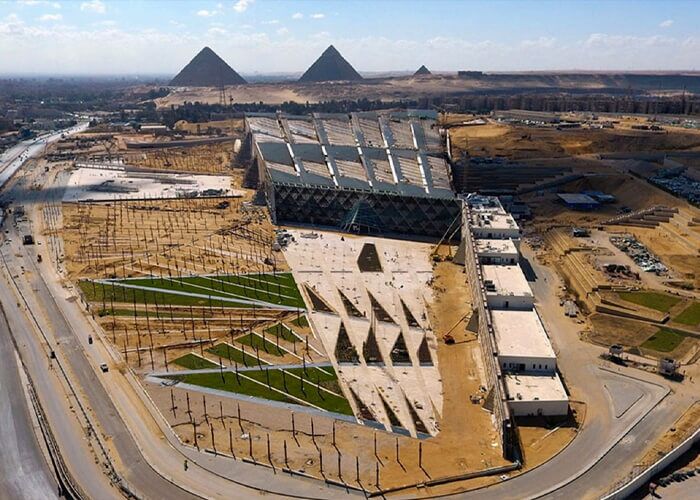
The Grand Egyptian Museum is one of the most important cultural projects in the world today. It is not only a museum; it is a new stage for ancient Egypt, a place where archaeology, architecture, conservation, storytelling, and tourism come together on a monumental scale. Located near the Giza Pyramids Complex, the Grand Egyptian Museum was created to present Egypt’s ancient heritage with modern clarity, spacious galleries, advanced conservation facilities, and a dramatic visitor experience that feels worthy of the civilization it celebrates.
For many travelers, a visit to the Grand Egyptian Museum is the moment when Egypt’s ancient world becomes easier to understand. The pyramids give you scale. The temples give you atmosphere. The tombs give you mystery. But a great museum gives you context. It allows you to see royal statues up close, study jewelry, read inscriptions, compare dynasties, and understand how ancient Egyptians viewed kingship, religion, death, art, and daily life. The Grand Egyptian Museum was designed to do this with a level of space and presentation that the classic Egyptian Museum in Tahrir Square could not always provide.
The museum is especially famous for its connection to the treasures of Tutankhamun. For decades, the young pharaoh’s golden image has captured the world’s imagination. The Grand Egyptian Museum was conceived as a home where many of the objects from his tomb could be displayed together in a way that tells a fuller story. Beyond Tutankhamun, the museum also presents thousands of years of Egyptian history through royal statuary, funerary objects, temple reliefs, papyri, daily-life artifacts, and monumental sculptures that make the ancient world feel immediate and powerful.
This guide is written for first-time visitors, returning travelers, families, couples, solo explorers, history lovers, and anyone planning a trip to Cairo. We will explore what makes the Grand Egyptian Museum special, how to plan your visit, what highlights to prioritize, how it compares with the old Egyptian Museum, how to combine it with the Giza Pyramids, and what practical tips can help you enjoy the experience with less stress and more wonder.
Whether you have one day in Cairo or a longer route through Egypt, the Grand Egyptian Museum deserves attention. It is not just a stop before or after the pyramids. It is a destination in its own right, and for many travelers it becomes one of the most memorable parts of an Egypt journey.
The Grand Egyptian Museum does not simply house ancient Egypt. It gives ancient Egypt a modern home, with the space, light, and silence needed to let its treasures speak again.
Quick Answer: What Is the Grand Egyptian Museum?
The Grand Egyptian Museum, often called the GEM, is a major archaeological museum near the Giza Pyramids in Cairo, Egypt. It is designed to showcase ancient Egyptian civilization through expansive galleries, monumental statuary, conservation centers, educational spaces, and the famous Tutankhamun collections. Located close to the Giza Pyramids Complex, it offers travelers a modern alternative or complement to the classic Egyptian Museum in Tahrir Square. Most visitors plan between two and four hours for a focused visit, though history lovers may spend longer. The museum is especially valuable if you want to understand royal statues, funerary objects, ancient art, and the story of Tutankhamun in a spacious, contemporary setting.
Why the Grand Egyptian Museum Matters
The Grand Egyptian Museum matters because it represents a new chapter in how Egypt presents its ancient heritage. For more than a century, the classic Egyptian Museum in Tahrir Square served as the guardian of many of the world’s most famous archaeological treasures. It was groundbreaking in its time, but as collections grew and tourism expanded, the old museum became crowded, dense, and difficult to navigate. The Grand Egyptian Museum was created to answer that need with modern space, improved lighting, better circulation, and a more immersive way of displaying ancient objects.
The museum also matters because of its location. Sitting near the Giza Plateau, it creates a powerful connection between monuments and artifacts. When you visit the pyramids, you see the exterior expression of ancient royal power. When you visit the Grand Egyptian Museum, you move closer to the faces, names, objects, and beliefs behind that power. The museum helps turn stone monuments into human history.
Another reason the GEM is important is its role in conservation. Ancient artifacts are fragile. Statues, wood, textiles, papyri, pigments, and organic materials require careful control of humidity, temperature, light exposure, and handling. The museum includes advanced conservation laboratories and storage facilities, allowing specialists to preserve objects while also presenting them to the public. This makes the museum not only a display space, but also a working center for the protection of Egypt’s heritage.
For travelers, the Grand Egyptian Museum is valuable because it helps you build a clearer mental map of ancient Egypt. You can see how artistic styles changed across dynasties. You can compare Old Kingdom serenity with New Kingdom confidence. You can study royal crowns, offerings, amulets, coffins, and temple reliefs in ways that deepen later visits to Luxor, Aswan, Saqqara, and Giza. A museum visit is never separate from the rest of Egypt; it prepares your eyes and sharpens your curiosity.
The Grand Egyptian Museum matters because it gives ancient objects room to breathe, and gives visitors room to understand.
Location: Why Being Near Giza Changes the Experience
The Grand Egyptian Museum is located near the Giza Plateau, one of the most famous archaeological landscapes on Earth. This location is not accidental. It creates a dialogue between the museum and the pyramids. The pyramids were built as royal funerary monuments, while the museum displays many of the objects, statues, and artifacts that help explain the culture that produced them. Visiting both in one day allows you to move between monumental architecture and intimate detail.
From certain areas of the museum grounds, visitors can feel the presence of the plateau nearby. The setting helps remind you that these objects did not originate in a neutral gallery. They came from tombs, temples, palaces, workshops, and sacred landscapes. The museum does not remove ancient Egypt from its context; it reframes it for modern understanding.
The location also makes the Grand Egyptian Museum easy to combine with a wider Cairo itinerary. You can visit the pyramids in the morning, spend the afternoon in the museum, and finish with sunset views over the Giza Plateau. Or you can reverse the order, depending on weather, crowds, and your personal pace. For many travelers, this combination creates one of the richest cultural days possible in Egypt.
If you are planning a route through the city, our guide to the best things to see in Cairo can help you connect the Grand Egyptian Museum with other highlights such as Islamic Cairo, Coptic Cairo, the Nile Corniche, and downtown attractions.
Near the pyramids, the Grand Egyptian Museum feels less like a building and more like a continuation of the ancient landscape.
The Vision Behind the Grand Egyptian Museum
The idea behind the Grand Egyptian Museum was to create a museum that matched the grandeur of ancient Egypt itself. For many visitors, the word “grand” is not just a name. It describes the experience: large spaces, dramatic approaches, monumental statues, and a sense of procession that echoes ancient temple architecture. The museum was designed to make visitors feel they are entering a place of importance, not merely browsing a collection.
The vision also includes education. A modern museum is not only a repository of beautiful objects. It is a place where visitors can learn how archaeology works, how artifacts are restored, how hieroglyphs are read, and how ancient societies functioned. The Grand Egyptian Museum includes spaces designed to explain processes, not just display results. This makes it especially valuable for families, students, and curious travelers who want more than photo opportunities.
Another important part of the vision is national pride. Egypt’s ancient heritage belongs to Egyptians first, and the museum is a statement that the country’s past is protected, studied, and presented with seriousness and sophistication. For international visitors, this adds depth to the experience. You are not only seeing artifacts; you are witnessing a culture’s relationship with its own memory.
The museum also aims to be more than a tourist stop. It includes gardens, public spaces, dining areas, shops, and cultural facilities that encourage visitors to slow down. This matters in a country as intense as Egypt. A museum that allows rest, reflection, and comfort can transform a tiring day into a meaningful one.
The Grand Egyptian Museum was built with a simple but powerful idea: ancient Egypt deserves to be shown with space, light, and reverence.
Architecture and First Impressions
One of the first things visitors notice about the Grand Egyptian Museum is its sense of arrival. The approach is designed to build anticipation. Rather than placing you immediately inside a conventional gallery, the museum guides you through a sequence of spaces that feel ceremonial. This is very Egyptian in spirit. Ancient temples were also built through progression: entrance, court, hall, sanctuary. Each stage prepared the visitor for a deeper encounter.
The architecture uses light carefully. Large windows and transparent surfaces create connections between interior galleries and the surrounding landscape. In some areas, visitors can see the Giza Plateau while standing among ancient statues. This visual link is powerful. It reminds you that the objects inside were born from the same land visible outside.
The museum’s design also emphasizes scale. Many ancient Egyptian statues were never meant to be viewed in small, crowded rooms. They were created for temples, tombs, and public ritual spaces. The Grand Egyptian Museum gives these works room to command attention. A colossal statue can be seen from a distance, approached slowly, and studied from multiple angles. This changes the emotional impact completely.
For travelers who enjoy architecture, the museum itself is worth observing. It is modern without erasing ancient memory. It uses contemporary materials and methods while still creating a atmosphere of solemnity and wonder. The building does not compete with the artifacts; it frames them.
The Grand Egyptian Museum begins teaching you before you reach the first display case: ancient Egypt was a civilization of procession, light, scale, and sacred order.
The Tutankhamun Galleries: The Museum’s Most Famous Story
No discussion of the Grand Egyptian Museum is complete without mentioning Tutankhamun. The young pharaoh’s tomb, discovered in the Valley of the Kings, changed the world’s imagination of ancient Egypt. The treasure found inside KV62 became a global symbol of archaeological discovery, royal wealth, and the mystery of the afterlife.
The Grand Egyptian Museum was designed to present the Tutankhamun collection in a way that tells a fuller story than a single golden mask can tell. Instead of treating the objects as isolated masterpieces, the museum can display them as parts of a burial ensemble: furniture, chariots, weapons, ritual objects, coffins, shrines, jewelry, and everyday items placed in the tomb for the king’s journey into eternity.
What makes this approach important is context. Tutankhamun is often remembered as the boy king with the golden mask, but the collection reveals a much richer picture. It shows the skills of ancient craftsmen, the religious beliefs of the New Kingdom, the importance of royal funerary equipment, and the way a tomb was designed as a complete universe for the afterlife.
For first-time visitors, the Tutankhamun galleries can be overwhelming in the best way. There is so much detail, so much craftsmanship, and so much historical weight that it is easy to lose track of time. The best advice is to slow down. Do not rush from case to case. Choose a few objects and study them. Look at materials, inscriptions, wear, color, and form. The smaller details often carry the deepest stories.
If you are especially fascinated by Tutankhamun, consider pairing your museum visit with a wider Luxor itinerary. Seeing the Valley of the Kings after visiting the museum can make the tomb feel more real, while visiting the museum after Luxor can help you understand what a royal burial was meant to contain.
Tutankhamun’s treasures are famous because of gold, but they are meaningful because of belief. The museum helps you see both.
The Grand Staircase and Monumental Statuary
One of the most visually striking areas of the Grand Egyptian Museum is the grand staircase. It is not simply a way to move between floors. It is a curated ascent through Egyptian history, lined with monumental statues and reliefs that create a dramatic visual journey. As you climb, you pass faces of kings, gods, and sacred symbols that once belonged to temples, tombs, and royal complexes.
The staircase is powerful because it allows visitors to experience ancient Egyptian art on a scale that matches its original intention. Many of these statues were not made to be small, private, or decorative. They were made to inspire awe, assert authority, and connect the king with the divine. Seeing them in a vast, light-filled space restores some of that original impact.
As you move upward, the sequence of works can help you understand changes in style across periods. Old Kingdom serenity, Middle Kingdom intensity, and New Kingdom confidence each have visual signatures. Even if you are not a specialist, you can begin to notice differences in proportion, expression, inscription, and posture. The staircase becomes a lesson in art history without feeling like a lecture.
For photography, the grand staircase is one of the most memorable areas in the museum. The combination of stone figures, perspective, and natural light creates images that feel cinematic. Still, remember that a museum is a shared space. Take your time, be aware of other visitors, and follow all photography rules.
The grand staircase does not just connect floors. It connects centuries.
The Colossal Statue of Ramesses II
Among the most iconic objects associated with the Grand Egyptian Museum is the colossal statue of Ramesses II. Ramesses II, also known as Ramesses the Great, was one of Egypt’s most powerful and long-reigning pharaohs. His name appears across temples, monuments, and colossal statues throughout Egypt. Seeing a massive representation of him inside the museum is a reminder of how royal imagery functioned in ancient society.
The statue is not impressive only because of its size. It is impressive because of what size meant. In ancient Egypt, monumental sculpture was a language of power. A king’s image had to communicate stability, divine favor, military strength, and eternal presence. The colossal statue of Ramesses II does exactly that. It turns stone into authority.
Visitors often stand before the statue in silence for a moment. That reaction is understandable. The face is both human and idealized. The posture is calm but commanding. The scale makes your own body feel small, not in a humiliating way, but in a way that connects you to the ancient intention. The statue was never meant to be casual. It was meant to be encountered.
If you are interested in Ramesses II beyond the museum, consider connecting your visit with temples in Luxor and Abu Simbel. His monuments are among the most dramatic in Egypt, and seeing his name and image in multiple contexts helps you understand how carefully ancient kings constructed their legacy.
Ramesses II understood something modern leaders still learn: power is not only exercised. It is represented.
Royal Statues: Faces of Power and Eternity
The royal statues in the Grand Egyptian Museum are among its most moving collections. Unlike modern portraits, ancient Egyptian royal images were not always meant to capture a fleeting individual mood. They were meant to express eternal qualities: justice, strength, divine connection, stability, and the king’s role as mediator between gods and people.
When you look at these statues, pay attention to the eyes. In many works, the gaze feels direct but calm, as if the king is watching over Egypt from another realm. Notice the headdresses, false beards, crossed arms, and inscribed names. These are not decorative details. They are part of a visual theology of kingship.
The museum’s spacious design allows visitors to walk around statues and view them from multiple angles. This is especially valuable because ancient sculpture was often designed to be approached ritually, not merely observed frontally. Moving around a statue can reveal details that a photograph cannot capture: the curve of a shoulder, the precision of an inscription, the contrast between polished granite and softer limestone.
Royal statues also help travelers understand the difference between dynasties. Some kings are shown with youthful idealism. Others appear more mature, muscular, or severe. These choices were deliberate. A statue could communicate continuity, reform, military strength, religious devotion, or royal legitimacy.
A royal statue is not just a portrait. It is a promise carved in stone.
Funerary Objects: Death as a Transition
Ancient Egypt is impossible to understand without understanding its funerary culture. The Egyptians did not see death as a simple ending. They saw it as a dangerous but navigable transition. The deceased needed protection, guidance, offerings, spells, and a preserved body to continue into the afterlife.
The Grand Egyptian Museum presents many objects connected to this belief system: coffins, sarcophagi, canopic equipment, amulets, masks, funerary figures, and ritual objects. Each item had a purpose. Some protected the body. Some fed the spirit. Some guided the deceased through trials. Some declared identity before the gods.
For modern visitors, these objects can feel both beautiful and strange. A painted coffin is not only a piece of art; it is a portable tomb. An amulet is not only jewelry; it is spiritual armor. A mask is not only a likeness; it is a face for eternity. The museum helps you move beyond aesthetic appreciation into cultural understanding.
If you plan to visit the Valley of the Kings or other tombs in Luxor, these funerary objects provide essential preparation. They show what tomb owners hoped to possess, protect, and activate in the afterlife. When you later enter a painted burial chamber, the meaning becomes richer.
In ancient Egypt, death was not silence. It was a journey equipped with spells, images, and hope.
Daily Life Objects: The Human Side of Ancient Egypt
While kings and gods dominate the popular image of ancient Egypt, daily life objects reveal the humanity behind the monuments. The Grand Egyptian Museum includes artifacts connected to ordinary and elite life: tools, vessels, cosmetics, furniture, clothing fragments, toys, games, writing materials, and household items.
These objects are important because they break the illusion that ancient Egypt was only a civilization of pharaohs and temples. People cooked, played, traded, wrote letters, repaired tools, dressed children, celebrated festivals, mourned losses, and worried about the future. The small details of daily life make the ancient world feel less remote.
Some of the most memorable museum moments come from unexpected places. A worn wooden object, a simple pot, a child’s toy, or a cosmetic spoon can create a sudden emotional bridge across thousands of years. These items do not shout like colossal statues, but they whisper with remarkable clarity.
For families, daily-life objects can be especially engaging for children. They are easier to relate to than abstract religious symbols. Asking a child to imagine using a bronze mirror, carrying a water jar, or playing a board game can make ancient Egypt feel alive rather than academic.
The statues show Egypt’s eternity. The everyday objects show Egypt’s humanity.
Conservation Centers: Where the Museum Works Behind the Scenes
One of the most important but less obvious aspects of the Grand Egyptian Museum is its conservation infrastructure. Many visitors think of museums as places where objects are displayed, but a major museum is also a place where objects are studied, cleaned, stabilized, and repaired. The GEM includes conservation facilities that allow specialists to work on fragile artifacts using modern methods.
This matters because ancient objects are not immortal. Wood can crack. Pigments can fade. Metals can corrode. Papyri can crumble. Stone can suffer from salt, humidity, and vibration. Conservation science helps slow these processes and preserve objects for future generations.
For curious travelers, learning about conservation changes the way you view the museum. Each display case becomes not only a presentation but also a protection. Each label becomes part of a larger effort to understand and preserve. The museum is not passive. It is actively caring for civilization’s memory.
Depending on current visitor access, some conservation areas may be visible through glass or explained through displays. Even if you cannot enter laboratories, knowing they exist adds depth to your visit. It reminds you that archaeology does not end with excavation. It continues with preservation.
The Grand Egyptian Museum protects the past as much as it presents it.
Gardens, Public Spaces, and the Pace of the Visit
A museum visit can become mentally heavy if every moment is spent inside galleries. The Grand Egyptian Museum includes outdoor and public spaces that allow visitors to pause, look up, and process what they have seen. Gardens, seating areas, and open views create a rhythm that is essential in a large museum.
This is especially important in Egypt, where travel days can be long, heat can be intense, and cultural sites can feel emotionally dense. A few minutes outside, with light air and a view of the landscape, can restore your attention. Do not skip these pauses. They are part of the experience.
The public spaces also make the museum more welcoming for families, older travelers, and visitors with different energy levels. Not everyone can move through three hours of continuous gallery viewing. A museum that allows rest becomes more inclusive and more enjoyable.
If you are visiting with children, consider using the outdoor spaces as reset points. Let them move, drink water, and talk about what surprised them. A museum visit works best when it is not treated as a test of endurance.
The best museum visits are not the longest ones. They are the ones that allow curiosity to breathe.
Grand Egyptian Museum vs Egyptian Museum: Which Should You Visit?
One of the most common questions from travelers is whether to visit the Grand Egyptian Museum, the classic Egyptian Museum in Tahrir Square, or both. The answer depends on your time, interests, and travel style.
The Egyptian Museum has historical charm. It is the old heart of Egyptology in Cairo, filled with objects that have been admired for generations. Its rooms can feel crowded, its displays dense, and its atmosphere old-fashioned. But that is also part of its appeal. It feels like a museum with memory.
The Grand Egyptian Museum offers space, modern design, clearer presentation, and a more comfortable visitor experience. It is especially valuable if you want to study royal statuary, Tutankhamun objects, and ancient art in a less compressed environment. It also connects more directly with the Giza Plateau.
If you have only one museum visit and you love atmosphere and history, the old Egyptian Museum may still appeal to you. If you want modern comfort, spacious galleries, and a strong connection to Giza, the Grand Egyptian Museum is likely the better choice. If you have time in Cairo, visiting both can give you a fuller understanding of how Egypt presents its past.
For broader museum planning, see our guide to top museums in Egypt.
The old museum feels like the memory of Egyptology. The Grand Egyptian Museum feels like its future.
Best Time to Visit the Grand Egyptian Museum
The best time to visit the Grand Egyptian Museum is early in the day, especially if you are combining it with the Giza Pyramids. Mornings are usually calmer, light is softer, and your energy is higher. If you arrive after large tour groups, the experience can feel more crowded and rushed.
Late afternoon can also work well, particularly if you prefer a slower pace and plan to finish with sunset views near Giza. However, check current closing times and last entry rules before building your schedule. Museums often stop admitting visitors before final closing.
In terms of season, the most comfortable months for Cairo travel are generally October through April. During this period, you can combine outdoor pyramid visits with indoor museum time without facing extreme heat. If you are planning around specific months, our guides to Egypt in October, Egypt in November, and Egypt in January can help you set expectations.
Summer visits are still possible, and the museum’s air-conditioned spaces can be a relief from Cairo heat. However, outdoor areas, transport, and combined pyramid visits require more planning. If you travel in summer, start early, stay hydrated, and avoid overloading your day.
For broader seasonal advice, see our guide to the best time of year to visit Egypt and our article on climate and weather in Egypt.
A museum is a place of attention. Go early, and you will have more of it.
How Much Time Do You Need at the Grand Egyptian Museum?
For most travelers, two to three hours is a good baseline for the Grand Egyptian Museum. This allows time to move through major galleries, see the Tutankhamun collections, view monumental statues, and pause without rushing. If you are combining the museum with the pyramids in one day, three hours is often enough to feel satisfied without exhausting yourself.
If you are a history enthusiast, photographer, student, or deeply curious traveler, you may want four hours or more. The museum is large, and many objects reward slow looking. You may find yourself returning to a statue, a relief, or a small artifact again and again as details reveal themselves.
For families with children, keep the visit shorter and more focused. One and a half to two hours may be enough if you choose highlights and build in breaks. Children often respond best to a few strong images: golden objects, colossal faces, coffins, animals, and everyday artifacts.
If you are visiting independently, decide before arrival whether you want a broad overview or a deep dive. A broad overview helps you understand ancient Egypt in general. A deep dive lets you study specific periods, objects, or themes. Both are valid, but mixing them without a plan can leave you tired.
For itinerary planning, see our Egypt itinerary guide and our 3-day Egypt itinerary ideas for short Cairo stops.
Two hours gives you highlights. Three hours gives you understanding. Four hours gives you a conversation with ancient Egypt.
Tickets, Entry, and Practical Visitor Tips
Ticketing policies for the Grand Egyptian Museum can change depending on season, exhibitions, access areas, and museum management. Before visiting, check current ticket prices, opening hours, and whether special galleries require separate entry. If you are visiting during peak season, booking or planning ahead can save time.
Security screening is normal at major museums in Egypt. Bags may be checked, and large luggage is usually not permitted inside. If you are staying at a hotel, consider leaving unnecessary bags there. A small daypack with water, camera, phone, wallet, and tissues is usually enough.
Inside the museum, follow signage and staff guidance. Some galleries may restrict tripods, flash, selfies, or commercial photography. If you are unsure, ask. Respecting museum rules helps protect fragile objects and keeps the experience calm for everyone.
If you want a smoother visit, consider a guided option. A structured private half-day tour to the Grand Egyptian Museum can help you focus on highlights without wasting time on logistics. For a fuller Cairo day, a private day tour to the Grand Egyptian Museum and Pyramids of Giza can combine museum context with monumental sightseeing.
A great museum visit begins with small decisions: when you arrive, what you prioritize, and how much patience you bring.
How to Get to the Grand Egyptian Museum
The Grand Egyptian Museum is located near Giza, not far from the pyramids. Depending on your starting point in Cairo, travel time can vary significantly because of traffic. From central Cairo, the journey may take 30 minutes in good conditions or over an hour during busy periods. Always allow extra time, especially if you have a guided tour, flight, or evening plan afterward.
Taxis and ride-hailing apps are common options for independent visitors. If using an app, confirm the exact drop-off point and make sure the driver understands you are heading to the museum entrance rather than a nearby hotel or generic Giza address.
Private drivers are often the most comfortable choice, especially if you are combining the museum with the pyramids, Saqqara, Memphis, or downtown Cairo. A driver can wait while you visit, reducing stress and saving time.
If you are staying in Cairo and want a simpler route, consider joining a Cairo day tour. Organized tours can handle transport, timing, and orientation, which is helpful in a city as large and complex as Cairo.
In Cairo, transport is not just logistics. It is part of the art of planning.
Combining the Grand Egyptian Museum with the Giza Pyramids
The most natural pairing is the Grand Egyptian Museum with the Giza Pyramids Complex. Together, they create a full-day experience that moves from monumental landscape to detailed artifact. The pyramids show you the scale of ancient royal ambition. The museum shows you the faces, objects, beliefs, and craftsmanship behind that ambition.
A strong morning route is to visit the pyramids early, when heat and crowds are lower, then spend late morning or early afternoon in the museum. This allows you to escape the midday sun while continuing your cultural journey. Another option is to visit the museum first, especially if you arrive in Cairo later in the day, then finish with sunset views near Giza.
If you have more time, add Saqqara and Memphis. Saqqara is home to the Step Pyramid of Zoser, the earliest colossal stone building in Egypt and a crucial ancestor of the Giza pyramids. Memphis, the ancient capital, offers colossal statues and open-air remains that deepen your understanding of the Memphite region.
For a broader route, see our guide to Egypt pyramids tours and our Cairo Egypt itinerary guide.
The pyramids ask you to look up. The museum asks you to look closely. Together, they teach you ancient Egypt from both directions.
Is the Grand Egyptian Museum Safe for Tourists?
The Grand Egyptian Museum is generally safe for tourists. Security is present, and the museum is a major public cultural institution designed for international visitors. As with any busy destination, normal awareness is recommended. Keep your belongings close, follow official routes, and avoid displaying expensive items unnecessarily.
Most issues visitors encounter are not serious safety threats but minor hassles: persistent vendors outside, unofficial guides, confusing transport, or pressure to buy services. These situations are manageable with preparation and a calm attitude. A polite but firm refusal is usually enough.
If you want broader reassurance before your trip, read our guide on whether it is safe to travel to Egypt. For practical advice on handling common tourist pressures, see our article on tourist scams in Egypt.
The museum is a calm space in a busy city. Preparation is what keeps the calm intact.
What to Wear and What to Bring
The Grand Egyptian Museum is mostly indoors, but your visit may include outdoor spaces, transport, and nearby pyramid stops. Dress comfortably and modestly. Lightweight breathable clothing is practical, especially if you are traveling in warmer months. Comfortable walking shoes are important because you may be on your feet for two hours or more.
Bring a small bag with water, sunscreen, tissues, hand sanitizer, a power bank, and your camera or phone. Large bags can be inconvenient and may be restricted. If you plan to visit religious sites afterward, carrying a scarf or light layer can be useful.
If you are combining the museum with the pyramids, remember that the plateau is exposed and hot. The museum offers air-conditioned relief, but the surrounding area does not. Plan your route with shade, hydration, and rest in mind.
For a complete checklist, see our guide to what to pack when traveling to Egypt.
Pack light, dress calmly, and bring patience. Museums reward visitors who are not distracted by discomfort.
Photography Tips Inside the Grand Egyptian Museum
Photography in the Grand Egyptian Museum can be beautiful, but it requires patience. Lighting varies, glass cases create reflections, and popular objects may have crowds around them. The best approach is to observe first, then shoot carefully.
Turn off flash if permitted, and avoid blocking display cases for long periods. Use steady hands, higher ISO settings if needed, and look for angles that reduce glare. Wide shots can capture the architecture and monumental statues, while close details can reveal inscriptions, pigments, and craftsmanship.
Do not focus only on famous objects. Some of the best images come from quieter corners: a weathered relief, a small amulet, a painted fragment, or the shadow of a statue against stone. These details can make your photo album feel more personal.
Always respect museum rules. Some areas may restrict tripods, drones, flash, or commercial photography. If you are unsure, ask staff. A respectful approach makes the experience better for everyone.
The best museum photographs are not the fastest ones. They are the quietest, closest, and most attentive.
Visiting the Grand Egyptian Museum with Kids
The Grand Egyptian Museum can be an excellent destination for children if the visit is planned with their energy and attention in mind. Kids often respond strongly to golden objects, giant statues, coffins, animals, and the idea of ancient kings. However, large museums can become tiring if you try to cover too much.
Before entering, give children a simple mission: find the biggest statue, look for a golden object, spot a cat or animal figure, or notice how many kings have different faces. This turns the museum into an exploration rather than a lecture.
Take breaks. Use seating areas, drink water, and allow children to move. If your family wants a more guided and engaging experience, consider a private tour designed for Cairo sightseeing. For broader family advice, see our guide to Egypt with kids.
Children do not need to memorize dynasties. They need one giant statue, one golden mask, and one story that makes the past feel alive.
Solo Travel and Romantic Museum Visits
Solo travelers often find the Grand Egyptian Museum deeply rewarding. You can move at your own pace, linger where you wish, skip what does not interest you, and think without interruption. Cairo can feel intense, and a museum offers a rare pocket of calm.
If you are traveling alone, especially as a woman, plan transport carefully and keep normal city awareness in mind. Our guides to tips when traveling to Egypt alone and the solo female travel Egypt guide can help you prepare with more confidence.
For couples, a museum visit can be romantic in a quiet way. Sharing a silent moment before a royal statue, discussing ancient beliefs, or walking through galleries together can create a different kind of intimacy. Pair the museum with a Nile sunset walk or a calm dinner afterward for a more balanced day.
If you are planning a romantic Egypt journey, our Egypt honeymoon itinerary guide can help you combine culture with comfort.
A museum can be intimate. Not because it is soft, but because it asks you to slow down beside someone and look closely at time.
Budget Tips and Travel Value
The Grand Egyptian Museum can be visited on different budgets. Independent entry is usually the most affordable option, while guided tours add convenience, interpretation, and transport support. The best choice depends on your comfort level, time, and interest in historical context.
If you are budget-conscious, consider visiting independently, bringing your own water, and combining the museum with low-cost city experiences such as walking along the Nile Corniche or exploring nearby neighborhoods. However, do not sacrifice safety or comfort just to save a small amount.
If you prefer guided value, look for tours that combine the museum with other Cairo highlights. A shared or private day tour can save time and reduce confusion around traffic, tickets, and routing.
For broader budget guidance, see our article on Egypt travel costs. For value-focused travel options, visit our Egypt budget tours page.
The best museum value is not the cheapest ticket. It is the visit where you understand what you are seeing.
Common Mistakes to Avoid at the Grand Egyptian Museum
One of the most common mistakes is trying to see everything in one pass. The museum is large, and visitors often begin with enthusiasm but end with fatigue. Choose priorities before you enter. Decide whether you want Tutankhamun, royal statues, funerary objects, daily life artifacts, or a broad overview.
Another mistake is arriving without enough time. If you are combining the museum with the pyramids and other Cairo sites, do not squeeze the museum into 45 minutes. It deserves more. A rushed visit can leave you with impressions but little understanding.
Some visitors also ignore labels and context. It is tempting to rush toward famous objects, but the small labels and surrounding artifacts often provide the most interesting details. Read what you can, ask your guide questions, and do not be afraid to stand quietly with one object for a few minutes.
Finally, many travelers separate the museum from the rest of their Egypt trip. Do not. The museum is most powerful when it becomes a lens for what you see later in Luxor, Aswan, Giza, Saqqara, and beyond.
The biggest mistake in a museum is treating it like a race. Ancient Egypt waited thousands of years to be seen. You can afford to slow down.
Museum Etiquette and Respectful Travel
Museums are public cultural spaces, and respectful behavior matters. Speak softly, keep children close, avoid leaning on cases, and do not touch artifacts unless explicitly permitted. Many objects are fragile, ancient, and carefully preserved.
When photographing, be mindful of other visitors. Do not block cases for long periods, and avoid using flash if prohibited. If you need a better angle, wait politely or ask staff for guidance.
Dress respectfully, especially if you are combining your museum visit with religious sites in Cairo. Egypt is generally welcoming to tourists, but modest dress helps you move comfortably through different cultural spaces.
If you hire a guide, agree on fees in advance and tip fairly when service is good. For broader etiquette advice, see our guide to tipping in Egypt.
Respect in a museum is simple: look closely, move calmly, touch nothing, and remember that these objects are not props. They are survivors.
How the Grand Egyptian Museum Connects to Other Cairo Attractions
The Grand Egyptian Museum is easiest to enjoy when connected to other parts of Cairo. From Giza, you can move toward downtown, Islamic Cairo, Coptic Cairo, the Nile Corniche, or the Saqqara-Memphis axis. Each direction adds a different layer to your understanding of the city.
If you love ancient history, pair the museum with the Great Pyramid of Cheops, the Great Sphinx of Giza, and the classic Egyptian Museum. If you are interested in religious history, add Coptic Cairo and the Hanging Church, the Ben Ezra Synagogue, and nearby churches. If you are drawn to Islamic heritage, visit the Citadel of Saladin, the Al-Azhar Mosque, and the Ibn Tulun Mosque.
For a broader city overview, see our Cairo destination guide and our article on the best things to see in Cairo.
Cairo is a city of layers. The Grand Egyptian Museum gives you ancient Egypt, but the streets around it give you centuries more.
How the Museum Fits Into a Wider Egypt Trip
For most travelers, the Grand Egyptian Museum is part of a larger cultural journey. It often serves as an introduction before flying to Luxor or Aswan, or as a reflective stop after visiting temples and tombs. Either way, it helps connect the dots.
If you visit before Luxor, the museum can prepare you to recognize royal names, funerary objects, divine iconography, and artistic styles. If you visit after Luxor, it can deepen what you have already seen, turning temple reliefs and tomb paintings into a broader historical conversation.
For short trips, the museum can be combined with Giza in one day. For longer itineraries, it can be paired with Saqqara, Memphis, Islamic Cairo, Coptic Cairo, and even a Nile cruise departure route.
See our Egypt itinerary guide, Egypt in 7 days, 10-day Egypt itinerary, and 14-day Egypt itinerary for planning ideas.
A museum visit is never truly separate from the rest of Egypt. It is the place where the country’s fragments begin to form a whole.
Guided Tours vs Independent Visits
You can visit the Grand Egyptian Museum independently or with a guide. Both options have advantages. Independent visits give flexibility and lower cost. Guided visits provide context, efficiency, and deeper understanding.
For first-time visitors, a guide is often worth it. The museum contains thousands of objects, and without interpretation it is easy to feel overwhelmed. A good guide can help you focus on important pieces, explain historical context, and answer questions.
If you prefer independence, read a short overview before arrival, decide your highlights, and allow enough time. Do not expect to understand everything on your own. The museum rewards preparation.
For structured options, see our Egypt guided tours and Egypt sightseeing tours pages.
A guide cannot give you wonder, but it can remove confusion so wonder has room to arrive.
What to Expect Inside: Atmosphere, Layout, and Mood
Walking into the Grand Egyptian Museum feels different from entering a traditional gallery. The spaces are large, the ceilings high, the light carefully controlled, and the atmosphere layered with anticipation. There is a sense that you are entering a place built for importance.
Some areas feel bright and open, while others are more enclosed and intimate. The museum can shift from monumental drama to quiet detail in a few steps. One moment you are facing a colossal king. The next you are studying a tiny scarab or a fragment of painted wood.
The emotional experience can also change. You may feel awe before royal statues, curiosity over jewelry, sadness before funerary objects, and wonder at the survival of materials that are thousands of years old. A great museum does not only inform. It moves you.
If you allow yourself to slow down, the Grand Egyptian Museum becomes more than a checklist of famous artifacts. It becomes a meditation on civilization, memory, and the human desire to be remembered.
The Grand Egyptian Museum does not simply display ancient Egypt. It invites you to listen to it, quietly, through stone, gold, paint, and time.
Frequently Asked Questions About the Grand Egyptian Museum
Is the Grand Egyptian Museum worth visiting?
Yes. The Grand Egyptian Museum is worth visiting for travelers who want a modern, spacious, and context-rich introduction to ancient Egypt. It is especially valuable if you are interested in Tutankhamun, royal statues, funerary objects, and the connection between museum artifacts and the nearby Giza Plateau. Even if you only have one day in Cairo, combining the museum with the pyramids can create a deeply memorable cultural experience.
How much time do you need at the Grand Egyptian Museum?
Most visitors need two to three hours to see the main highlights comfortably. If you are a history enthusiast, photographer, or deeply curious traveler, you may want four hours or more. Families with children may prefer a shorter visit focused on a few key objects and breaks in outdoor or seating areas.
What is the difference between the Grand Egyptian Museum and the Egyptian Museum?
The Egyptian Museum in Tahrir Square is the classic historic museum with a traditional, dense display style and long association with early Egyptology. The Grand Egyptian Museum near Giza is newer, larger, and designed with modern galleries, conservation facilities, and a more spacious visitor experience. The old museum offers atmosphere and memory; the Grand Egyptian Museum offers scale, clarity, and contemporary presentation.
Can you visit the Grand Egyptian Museum and the Pyramids of Giza in one day?
Yes, this is one of the best day-trip combinations in Cairo. A strong plan is to visit the pyramids early in the morning, then spend late morning or afternoon in the Grand Egyptian Museum. This route balances outdoor monuments with indoor context and helps you avoid the hottest part of the day in open areas.
Is the Grand Egyptian Museum suitable for children?
Yes, but keep the visit focused and allow breaks. Children often enjoy golden objects, giant statues, coffins, animals, and everyday artifacts. To make the experience more engaging, give them simple observation tasks rather than trying to explain every historical detail. For broader family advice, see our guide to Egypt with kids.
Do I need a guide at the Grand Egyptian Museum?
A guide is not mandatory, but it is highly recommended for first-time visitors. The museum is large and historically rich, and a good guide can help you focus on important objects, understand context, and avoid feeling overwhelmed. If you prefer independence, read a short overview before arrival and decide your highlights in advance.
What are the main highlights inside the Grand Egyptian Museum?
Major highlights include the Tutankhamun galleries, monumental royal statues, the grand staircase, the colossal statue of Ramesses II, funerary objects, jewelry, papyri, daily-life artifacts, and conservation-focused displays. The exact arrangement of galleries and objects can change, so it is wise to check current museum information before your visit.
Is the Grand Egyptian Museum safe for tourists?
Yes, the Grand Egyptian Museum is generally safe for tourists. Security is present, and the museum is a major cultural institution designed for visitors. As with any busy destination, keep your belongings secure, use official entrances, and stay aware of your surroundings. For broader travel reassurance, read our guide on whether it is safe to travel to Egypt.
What is the best time of day to visit the Grand Egyptian Museum?
Early morning is usually best because the museum is calmer and your energy is higher. Late afternoon can also work well, especially if you want to combine the visit with sunset near Giza. Avoid arriving too close to closing time if you want a relaxed experience.
Can you take photos inside the Grand Egyptian Museum?
Photography policies can vary by gallery and object. Some areas may allow photos without flash, while others may restrict tripods, flash, or commercial photography. Always follow posted signs and ask staff if you are unsure. Respecting the rules helps protect artifacts and keeps the museum comfortable for everyone.
Should I visit the Grand Egyptian Museum before or after the pyramids?
Both orders can work. Visiting the pyramids first gives you the dramatic outdoor experience while energy and light are best. Visiting the museum first provides context before you see the monuments. If you combine both in one day, a common strategy is pyramids early, museum later to escape heat and crowds.
Is the Grand Egyptian Museum accessible for older travelers?
The museum is designed with modern visitor comfort in mind, including spacious areas and elevators in many sections. However, large museums can still involve significant walking. Older travelers or visitors with mobility concerns should plan a shorter route, take breaks, and consider private transport or guided assistance.
What should I wear to the Grand Egyptian Museum?
Wear comfortable shoes and modest, breathable clothing. The museum is indoors, but your visit may include outdoor spaces, transport, and nearby pyramid stops. If you plan to visit religious sites afterward, carrying a scarf or light layer is useful.
Can I visit the Grand Egyptian Museum on a short Cairo layover?
Possibly, but it depends on your layover length, immigration time, traffic, and energy level. A short visit can work if you have several hours outside the airport and arrange private transport. For a safer and smoother option, consider a dedicated private half-day tour to the Grand Egyptian Museum.
Does the Grand Egyptian Museum have cafes, shops, and rest areas?
Yes, the museum is designed as a visitor complex with dining, shopping, seating, and public spaces. These facilities are especially useful if you are combining the museum with the pyramids or traveling with family. Taking a break inside the museum can make the experience more comfortable and less rushed.
Related Words and Topics Around the Grand Egyptian Museum
If you are researching the Grand Egyptian Museum, you may also be searching for terms such as GEM Cairo, Grand Egyptian Museum tickets, Grand Egyptian Museum opening hours, Tutankhamun museum, best museums in Cairo, Egyptian Museum vs Grand Egyptian Museum, Giza museum tour, ancient Egypt artifacts Cairo, Grand Egyptian Museum with pyramids, Cairo day trip Giza museum, and modern Egyptian museum. These topics all connect to the same experience: encountering ancient Egypt through a museum built to give its treasures space, clarity, and modern reverence.
- Grand Egyptian Museum for the main museum guide
- Giza Pyramids Complex for the nearby ancient plateau
- Egyptian Museum for the classic Cairo museum experience
- Top museums in Egypt for broader museum planning
- Cairo for city context and attractions
- The best things to see in Cairo for itinerary ideas
- Cairo day tours for structured visits
- Egypt travel tips for practical preparation
- Egypt itinerary guide for planning a wider trip
Final Thoughts: Why the Grand Egyptian Museum Stays With You
The Grand Egyptian Museum is more than a modern building near the pyramids. It is a place where ancient Egypt is given room to be understood. In its galleries, history becomes visible not only as spectacle but as story. You can see the faces of kings, the hands of craftsmen, the beliefs behind funerary objects, and the everyday details that make civilization feel human.
Many travelers arrive expecting to see famous treasures. They leave with something deeper: a sense of continuity. The objects inside the museum were made by people who lived, ruled, worshipped, feared death, hoped for eternity, and tried to leave meaning behind. Standing before them, you are not only observing history. You are participating in memory.
If you plan your visit well, respect the museum, allow enough time, and connect the experience with the nearby Giza Plateau, the Grand Egyptian Museum can become one of the highlights of your Egypt trip. It is not only a place to see ancient Egypt. It is a place to understand it.
The Grand Egyptian Museum does not simply display ancient Egypt. It invites you to listen to it, quietly, through stone, gold, paint, and time.
Ready to Visit the Grand Egyptian Museum Without Stress?
Let Egypt Via Travel help you plan a smooth Cairo journey that combines the Grand Egyptian Museum, the Giza Pyramids, and wider Egypt routes with comfort, clarity, and expert guidance.