
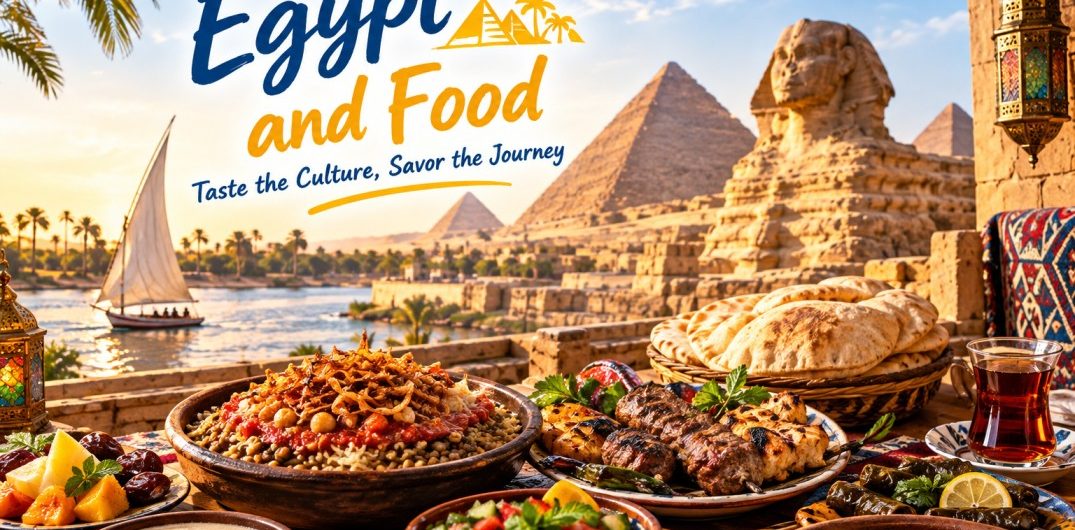
Egypt and food belong together in a way that is difficult to separate. To travel through Egypt is to encounter a country where meals are social, seasonal, generous, and deeply rooted in daily life. The Egyptian food experience is not only about filling your stomach. It is about sitting in a local café, sharing bread with strangers, tasting spices that have traveled through centuries, and understanding how the Nile, the desert, the sea, and the city all shape what ends up on the plate.
Egyptian cuisine is often described as hearty, comforting, and approachable. It is not built around extreme heat or complicated fusion trends. Instead, it relies on fresh ingredients, slow cooking, legumes, vegetables, grains, herbs, citrus, garlic, onions, tomatoes, cumin, coriander, vinegar, tahini, and olive oil. Meat appears often, especially lamb, chicken, beef, and fish, but many of Egypt’s most beloved dishes are vegetarian or vegan by nature. This makes Egypt surprisingly friendly for travelers who do not eat meat, though awareness of broths, butter, and fried preparations is still useful.
For many visitors, the food becomes one of the most memorable parts of the trip. The pyramids impress, the temples astonish, the Nile calms, and the markets excite, but it is often the smell of ful medames at breakfast, the crunch of fresh ta’ameya, the warmth of koshari with spicy tomato sauce, or the sweetness of basbousa with tea that stays in the memory longest. Food is how Egypt invites you into its everyday rhythm.
This guide is written for first-time visitors, returning travelers, families, couples, solo explorers, food lovers, budget travelers, luxury travelers, and anyone who wants to understand what to eat in Egypt, where to eat it safely, which dishes to try, how to order, what to avoid, and how to connect Egyptian food with a wider travel itinerary. We will explore traditional dishes, street food, regional specialties, desserts, drinks, dining etiquette, Ramadan food culture, vegetarian options, hygiene tips, costs, and practical advice for enjoying Egypt without stomach worries.
Whether you are spending one day in Cairo, cruising the Nile, visiting Luxor and Aswan, or relaxing on the Red Sea, food will be part of the journey. Egypt does not ask you to be an expert chef or a fearless eater. It simply asks you to be curious, patient, and open to the table.
In Egypt, food is not just sustenance. It is hospitality, memory, family, street life, and a quiet celebration of the land that makes it possible.
Quick Answer: What Is Egyptian Food Like?
Egyptian food is comforting, flavorful, and based on fresh, humble ingredients such as beans, lentils, rice, vegetables, herbs, citrus, garlic, onions, tomatoes, cumin, coriander, tahini, and olive oil. Common dishes include ful medames, ta’ameya, koshari, molokhia, mahshi, grilled meats, fish, and rice with vermicelli. Egyptian cuisine is generally mild rather than very spicy, though condiments like shatta chili sauce can add heat. Street food is popular and affordable, especially in Cairo, Alexandria, and Upper Egypt. Travelers can enjoy vegetarian, vegan-friendly, seafood, meat, and dessert options, but should choose busy places, bottled water, hot freshly cooked food, and reputable restaurants when concerned about hygiene.
Why Egyptian Food Matters to the Travel Experience
Food is one of the fastest ways to understand a country. In Egypt, meals reveal the rhythm of the day, the importance of family, the influence of the Nile, the legacy of trade routes, and the creativity of ordinary households. Egyptian dishes are not designed mainly for Instagram, though many are beautiful. They are designed for sharing, for feeding a family, for sustaining workers, for celebrating occasions, and for making simple ingredients feel satisfying.
Egyptian cuisine also carries history. Beans, lentils, onions, garlic, herbs, grains, and vegetables have been staples for thousands of years. The Nile Valley has always provided fertility, while trade brought spices, sugar, citrus, coffee, and ingredients from the wider region. Over time, Egyptian food absorbed influences from the Levant, the Mediterranean, North Africa, the Arabian Peninsula, and the Ottoman world, while remaining distinctly local.
For travelers, food matters because it creates connection. A plate of koshari at a street stall, a cup of hibiscus juice in Aswan, a bowl of molokhia in a family restaurant, or a simple breakfast of ful and ta’ameya can make Egypt feel less like a destination and more like a living place. It gives you a way to participate in local life without needing to speak fluent Arabic or understand every historical detail.
You can visit Egypt through its monuments, but you understand Egypt more deeply when you sit at its table.
What Makes Egyptian Cuisine Unique
Egyptian food is often grouped broadly within Middle Eastern or Mediterranean cuisine, but it has its own personality. It is less focused on elaborate sauces than some regional traditions and more centered on vegetables, legumes, grains, herbs, and simple cooking methods. Flavor comes from layering: garlic, onion, cumin, coriander, lemon, vinegar, tomato, parsley, dill, cilantro, and sometimes dried lime or spice blends.
One of the most distinctive features of Egyptian cuisine is its love of legumes. Beans and lentils are not side dishes; they are foundations. Ful medames, made from slow-cooked fava beans, is one of the most iconic Egyptian breakfast foods. Ta’ameya, the Egyptian version of falafel made from fava beans rather than chickpeas, is crisp outside, green inside, and deeply local. Koshari combines rice, lentils, pasta, chickpeas, fried onions, and a tangy tomato sauce into one of the country’s most famous street dishes.
Vegetables are also central. Eggplant, okra, molokhia leaves, peppers, tomatoes, cabbage, vine leaves, pumpkins, and leafy greens appear constantly. Many Egyptian dishes are vegetarian by default, which makes the cuisine welcoming for travelers who avoid meat. Even when meat is present, it is often used as flavor, garnish, or centerpiece rather than the only star of the plate.
Egyptian food is generally mild. Visitors expecting intense heat may be surprised. Spices are aromatic more than fiery. That said, many tables include shatta, a red chili sauce, vinegar, pickles, and fresh herbs, allowing each person to adjust the flavor. This balance is important: Egyptian cuisine is not about overwhelming the palate, but about enhancing natural ingredients.
Egyptian food is not loud. It is confident. It knows that beans, herbs, rice, lemon, and patience can create something unforgettable.
Traditional Egyptian Meal Structure: Breakfast, Lunch, and Dinner
Egyptian meals often follow a simple but satisfying structure. Breakfast is usually lighter and savory, lunch is the main meal of the day, and dinner can be lighter or shared depending on family habits, work schedules, and the season. In tourist hotels, meals may be buffet-style, but local life follows a more traditional rhythm.
Egyptian Breakfast
Breakfast in Egypt is one of the most authentic ways to begin the day. A classic local breakfast may include ful medames, ta’ameya, fresh bread, cheese, eggs, olives, cucumbers, tomatoes, herbs, tea, and sometimes honey or jam. It is not usually sweet in the Western hotel sense. Instead, it is savory, filling, and built around legumes and bread.
Ful medames is the undisputed king of Egyptian breakfast. Slow-cooked fava beans are seasoned with lemon, cumin, garlic, olive oil, and sometimes chili. Ta’ameya, the Egyptian falafel, is often eaten alongside it. Together, they create a meal that is inexpensive, nutritious, and deeply satisfying.
Egyptian Lunch
Lunch is traditionally the biggest meal. A family lunch may include rice, a vegetable dish, a protein such as chicken, lamb, beef, or fish, salad, bread, and sometimes soup. Dishes like molokhia, mahshi, stuffed peppers, grilled meats, and rice with vermicelli are common lunch favorites.
In restaurants, lunch can be generous and leisurely. In homes, it may be served with pride and abundance. If you are invited to an Egyptian home, expect hospitality that goes beyond the food itself: conversation, repeated offers of more, and a warm insistence that you eat enough.
Egyptian Dinner
Dinner may be lighter than lunch, especially in households where the midday meal was large. It can include sandwiches, salads, leftovers, cheese, eggs, ful, ta’ameya, or simple grilled items. In cities, dinner often happens later in the evening, and cafés, juice shops, and street food stalls remain active.
For travelers, dinner is often the easiest time to explore restaurants, try street food, and enjoy the atmosphere of Egyptian evenings. Cairo, Alexandria, Luxor, Aswan, and Red Sea towns all have different nighttime food moods, from busy downtown cafés to riverside fish restaurants to resort buffets.
Egyptian meals are not always complicated, but they are almost always generous. Bread, herbs, beans, rice, and time are treated with respect.
Must-Try Egyptian Dishes: The Essential Food List
If you only have a few days in Egypt, these are the dishes that give you the widest and most authentic introduction to Egyptian food. Some are street classics, some are home-style favorites, and some are regional specialties. Try them in order of curiosity, not fear.
| Dish | What It Is | Why Try It |
|---|---|---|
| Ful Medames | Slow-cooked fava beans with lemon, cumin, garlic, olive oil, and sometimes chili. | The most iconic Egyptian breakfast and a perfect introduction to local flavors. |
| Ta’ameya | Egyptian falafel made from fava beans and herbs, crispy outside and green inside. | Lighter and more herbal than many chickpea falafel versions, and delicious hot from the fryer. |
| Koshari | Rice, lentils, macaroni, chickpeas, fried onions, tomato sauce, and garlic vinegar. | Egypt’s most famous street comfort food: cheap, filling, tangy, and deeply satisfying. |
| Molokhia | Green leafy soup made from jute leaves, often served with rice and meat. | A true home-style Egyptian dish with a unique silky texture and garlicky flavor. |
| Mahshi | Stuffed vegetables such as vine leaves, peppers, zucchini, cabbage, or tomatoes. | A beautiful example of Egyptian vegetable cookery, often served with yogurt or broth. |
| Hamout Mahshi | Stuffed pickled turnips, often pink from beetroot, filled with garlic and chili. | A bold, tangy, crunchy side dish that is very Egyptian and unforgettable. |
| Sayadeia | Fisherman-style dish, often with fish, rice, tomatoes, onions, and herbs. | A great taste of coastal and Nile-side cooking, especially in Alexandria and Aswan. |
| Grilled Kofta and Kebabs | Minced meat skewers or chunks of beef, lamb, or chicken grilled over charcoal. | Simple, smoky, and widely available; excellent with salad, bread, and tahini. |
| Rice with Vermicelli | White rice cooked with toasted thin pasta noodles. | A humble but beloved side dish that appears at family meals and celebrations. |
| Hawawshi | Minced meat stuffed inside bread and baked until crisp. | A popular street sandwich that is comforting, meaty, and perfect for a quick lunch. |
| Fatta | Layers of bread, rice, meat broth, and garlic-yogurt sauce. | A traditional celebratory dish, especially associated with Eid and family feasts. |
| Basbousa | Semolina cake soaked in sweet syrup, often with coconut or almonds. | A classic Egyptian dessert that pairs beautifully with tea or coffee. |
| Kunafa | Shredded pastry with cheese or cream, soaked in syrup and often topped with nuts. | Rich, warm, and indulgent; a favorite during Ramadan evenings. |
| Om Ali | Egyptian bread pudding with milk, nuts, raisins, coconut, and pastry. | Comforting, sweet, and perfect for cold evenings or festive tables. |
| Qamar al-Din | Apricot drink or compote, especially popular during Ramadan. | A traditional seasonal beverage with a deep fruity flavor. |
| Karkade | Hibiscus flower drink, served hot or cold. | Refreshing, tart, and widely available; a welcome drink in hot weather. |
If you try only five Egyptian dishes, make them ful medames, ta’ameya, koshari, molokhia, and basbousa. They will give you a honest taste of the country.
Egyptian Street Food: What to Eat and How to Eat It Safely
Street food is one of the most exciting parts of Egypt and food culture. It is fast, affordable, flavorful, and woven into daily life. In Cairo, you can find koshari stalls, ful carts, ta’ameya shops, grills, juice vendors, sandwich makers, and dessert sellers around almost every busy neighborhood. In Alexandria, seafood and street-style fish sandwiches are common. In Upper Egypt, local dishes reflect Nile life, Nubian traditions, and simpler village flavors.
The best rule for street food is to follow the crowd. Busy stalls with high turnover are usually safer than empty ones because the food is being made and sold continuously. Look for places where locals are eating, where the cook handles food with care, and where items are freshly prepared. Hot food is generally safer than food sitting out for hours.
Best Street Foods to Try
- Koshari: A complete meal in one bowl, cheap and energizing.
- Ta’ameya: Fresh fried fava bean cakes, best eaten hot.
- Ful Medames: Savory beans, often served with bread and salad.
- Hawawshi: Meat-filled bread, baked until crisp.
- Grilled sandwiches: Chicken, kofta, or liver with salad and tahini.
- Fresh juice: Mango, orange, guava, pomegranate, lemon, and sugarcane depending on season.
- Roasted nuts and seeds: A simple snack often found in markets.
- Desserts: Basbousa, kunafa, luqamat, and sweets from local pastry shops.
Street Food Safety Tips
- Choose stalls with many local customers and frequent turnover.
- Prefer food cooked in front of you and served hot.
- Avoid raw salads or peeled fruit from uncertain sources if you have a sensitive stomach.
- Drink bottled water, not tap water.
- Ask for no ice in drinks if you are concerned about water quality.
- Carry hand sanitizer and tissues.
- Start with small portions to see how your stomach reacts.
- Do not be afraid of street food, but be selective and observant.
For broader practical advice, see our guides to Egypt travel tips and tourist scams in Egypt. Food scams are rare, but price confusion can happen, so always ask the cost before ordering from informal vendors.
Egyptian street food is not something to fear. It is something to approach with curiosity, common sense, and a little confidence.
Regional Egyptian Food: Cairo, Alexandria, Upper Egypt, Siwa, and the Red Sea
Egypt is a long country with varied landscapes, and its food changes with geography. While many dishes are national favorites, regional differences add depth to the culinary experience.
Cairo Food
Cairo is the heart of Egyptian street food and urban eating. Here you can find koshari, ful, ta’ameya, grills, pastries, juice shops, old cafés, and family restaurants. The city’s food scene is fast, abundant, and layered with neighborhood character. Downtown, Islamic Cairo, Coptic Cairo, Zamalek, Maadi, and Giza all offer different dining moods.
If you are visiting the Giza Pyramids Complex, you may be tempted by tourist restaurants near the plateau. For a more local experience, consider a short ride into Cairo for a koshari stop, a traditional café, or a family-style restaurant. For structured food-and-sightseeing routes, see our Cairo day tours.
Alexandria Food
Alexandria is Egypt’s Mediterranean city, and its food reflects the sea. Fish, shrimp, calamari, grilled seafood, sayadeia rice, and fresh seafood sandwiches are local strengths. The city also has a relaxed café culture and a strong tradition of seafood restaurants near the corniche.
If you visit Alexandria, try a seafood meal with views of the Mediterranean, then finish with karkade or fresh juice. The city’s food is lighter, brinier, and more coastal than Cairo’s.
Upper Egypt: Luxor, Aswan, and Nubian Flavors
Upper Egypt, including Luxor and Aswan, has a warmer, more rural, and more Nubian-influenced food culture. Dishes may feature pigeon, lamb, fish from the Nile, molokhia, mahshi, rice, herbs, dates, and simple home cooking. Aswan is especially known for Nubian hospitality, colorful homes, and local flavors.
In Nubian villages, meals can feel more personal and seasonal. Visitors may encounter dishes made with local produce, fresh bread, herbs, and river fish. If you are on a Nile cruise itinerary, ask your crew or guide about local restaurant recommendations when the ship docks.
Siwa Oasis Food
Siwa has a unique desert identity. Dates are central, and local cuisine often reflects Berber and oasis traditions. Simple breads, olive oil, herbs, soups, and date-based sweets are common. Siwa food is not as widely known as Cairo street food, but it offers a quieter and more remote taste of Egypt.
Red Sea Food
In Hurghada, Sharm El Sheikh, Marsa Alam, and El Gouna, seafood and resort dining dominate. Fish, prawns, calamari, grilled plates, international buffets, and beach restaurants are common. The Red Sea coast is ideal for travelers who want Egyptian seafood in a more relaxed resort setting.
Egypt tastes different in every region: Cairo is bustling, Alexandria is coastal, Aswan is warm and Nubian, Siwa is desert-simple, and the Red Sea is relaxed and seafood-rich.
Egyptian Desserts and Sweets
Egyptian desserts are rich, fragrant, and often syrup-based. They are not usually delicate in the French pastry sense. Instead, they are generous, nutty, creamy, and designed to accompany tea, coffee, or celebration.
Must-Try Egyptian Sweets
- Basbousa: Semolina cake with syrup, coconut, and almonds.
- Kunafa: Warm pastry with cheese or cream, syrup, and nuts.
- Om Ali: Egyptian bread pudding with milk, nuts, raisins, and coconut.
- Luqamat: Fried dough balls soaked in syrup, similar to doughnut holes.
- Malban: A jelly-like sweet often flavored and garnished with nuts.
- Halawa: Tahini-based sweet, often dense and sesame-rich.
- Dates: Especially from oases such as Siwa, often eaten plain or stuffed.
If you have a sweet tooth, do not leave Egypt without trying kunafa warm from a pastry shop or basbousa with a glass of tea. These desserts are best shared, because they are rich.
Egyptian sweets are not subtle. They are celebratory, syrupy, nutty, and made for long conversations after dinner.
Egyptian Drinks: Tea, Coffee, Juices, and Traditional Beverages
Drinks are an important part of Egyptian and food culture. Tea is everywhere, coffee is social, and fresh juices are refreshing in the heat. Traditional beverages also connect to seasons, celebrations, and local ingredients.
Tea
Egyptian tea is usually black tea, strong and sweet, often served in small glasses. Mint tea is also common and fragrant. Teahouses are social spaces where men gather to talk, play dominoes, smoke shisha in some places, and watch the street life.
Coffee
Egyptian coffee is similar to Turkish coffee: finely ground, strong, and often prepared with sugar. It is served in small cups and is part of hospitality. If you order ahwa, you may be asked how sweet you want it: sadeya without sugar, middama medium, or mazboot sweet.
Fresh Juices
Fresh juice is one of the best ways to beat the heat. Mango juice in summer is legendary. Orange, guava, pomegranate, lemon, carrot, and sugarcane juice are also popular. Choose busy juice shops where fruit is washed and cut in front of you.
Traditional Drinks
- Karkade: Hibiscus drink, tart and refreshing.
- Qamar al-Din: Apricot drink especially associated with Ramadan.
- Sobya: Coconut-based drink popular during Ramadan.
- Lemon with mint: A common café refreshment.
- Hot milk with honey: Sometimes ordered as a simple night drink.
In Egypt, a glass of tea is never just a drink. It is an invitation to pause, talk, and stay a little longer.
Vegetarian and Vegan Food in Egypt
Egypt is one of the more friendly destinations in the region for vegetarians, and even some vegans can eat well with a little planning. Many traditional dishes are plant-based or can be adapted. Legumes, vegetables, rice, bread, salads, herbs, tahini, and pickles form a strong vegetarian foundation.
Best Vegetarian Dishes
- Ful medames
- Ta’ameya
- Koshari, if prepared without meat broth
- Mahshi, especially vine leaves and stuffed peppers
- Molokhia, if served without meat garnish
- Salads with tahini, lemon, and olive oil
- Fried eggplant and pepper dishes
- Rice with vermicelli
- Fresh fruit and dates
Vegan Tips
Vegan travelers should ask whether dishes are cooked with ghee, butter, meat stock, or yogurt. Ful medames can be vegan if prepared with olive oil, lemon, cumin, and garlic. Ta’ameya is usually vegan, but frying oil and accompaniments should be checked. Koshari may contain meat-based broth, so ask specifically.
Useful phrases include: “bidoon lahm” meaning without meat, “bidoon zahra” meaning without cauliflower? Actually better to avoid incorrect phrases. Use simple English or ask guide: “No meat, no chicken, no broth, no yogurt.” For vegan: “No animal products, no butter, no ghee, no milk, no yogurt, no honey.”
Vegetarian travelers will not struggle in Egypt. The country’s beans, herbs, bread, and vegetables are among its greatest strengths.
Food Allergies and Dietary Restrictions
If you have allergies, Egypt requires careful communication. Common allergens include nuts, sesame, gluten, dairy, eggs, shellfish, and sometimes hidden ingredients in sauces or fried foods. Sesame appears in tahini and halawa. Nuts appear in desserts. Gluten is present in bread, pasta, and many fried items. Dairy may appear in pastries, rice dishes, and sweets.
The safest approach is to carry a written allergy card in Arabic and English, ask your guide to help explain, and choose simple dishes with visible ingredients. Street food can be wonderful, but cross-contact is possible. Restaurants in tourist areas may be more accustomed to dietary requests, while local eateries may be less familiar but more authentic.
For celiac or severe gluten sensitivity, bread is everywhere, so caution is essential. For nut allergies, desserts and pastries require special attention. For shellfish allergies, Alexandria and Red Sea seafood restaurants should be approached carefully.
Egypt welcomes guests, but allergies require clarity. Speak early, ask often, and do not be embarrassed to repeat your needs.
Dining Etiquette in Egypt
Eating in Egypt is social and informal, but there are customs that help you show respect and enjoy the experience more smoothly.
Bread Is Sacred
Bread is central to Egyptian meals. It is used to scoop, wrap, dip, and share. Do not waste bread, and avoid placing it upside down casually. If you are eating with locals, using bread with your hands is normal and appreciated.
Eat with Your Right Hand When Appropriate
In traditional settings, especially when eating with hands, using the right hand is polite. The left hand is often reserved for personal hygiene. If utensils are provided, this is less of an issue, but awareness is respectful.
Accept Hospitality Gracefully
Egyptians may offer food, tea, or more servings. Refusing too sharply can feel cold. A polite “shukran” with a smile is appreciated. If you cannot eat something, explain gently: “ana shayed” or “I’m full, thank you.”
Tipping and Service
Tipping is common in restaurants, cafés, and street food settings where service is involved. A small amount is appreciated for good service. For broader guidance, see our article on tipping in Egypt.
Egyptian dining is not governed by strict rules. It is governed by warmth, generosity, and respect for the table.
Ramadan and Egyptian Food
Ramadan transforms Egyptian food culture. During daylight hours, many Muslims fast, and restaurants may have limited service. After sunset, the country comes alive with iftar meals, street food, sweets, soups, and communal dining. The atmosphere is warm, generous, and deeply spiritual.
Typical Ramadan foods include ful medames, molokhia, koshari, soups, stews, grilled meats, dates, qamar al-Din, sobya, kunafa, basbousa, and om ali. Many families invite guests to break fast, and public iftar tents may appear in cities.
For travelers, Ramadan can be a beautiful time to visit Egypt if you plan around fasting hours. Some restaurants may close or reduce service before sunset, while evenings become lively. Non-Muslims are not expected to fast, but eating, drinking, or smoking openly in public during daylight should be done respectfully, especially in conservative areas.
For more seasonal planning, see our guide to Ramadan in Egypt.
Ramadan shows Egypt at its most generous: hungry days give way to joyful nights of soup, sweets, tea, and shared tables.
How to Include Egyptian Food in Your Itinerary
Food should not be an afterthought in Egypt. It can become part of the journey itself. Instead of eating only hotel buffets, build in local meals, market stops, café breaks, and regional specialties.
Cairo Food Day
Begin with a local breakfast of ful and ta’ameya. Visit the Giza Pyramids Complex in the morning, then have koshari for lunch. In the afternoon, stop for tea or fresh juice. End the day with a grilled dinner or a visit to a traditional café. For route ideas, see our best things to see in Cairo guide.
Alexandria Seafood Day
Combine coastal sights with a seafood lunch. Try grilled fish, sayadeia, calamari, and fresh juice. Walk the corniche afterward and finish with tea at a seaside café.
Luxor and Aswan Cultural Food Day
Visit temples in the early morning, then eat local dishes for lunch. In the afternoon, explore museums or riverside areas. At night, try Nubian-inspired food in Aswan or a traditional Egyptian dinner in Luxor. For temple planning, see our guides to Karnak Temple, Luxor Temple, and Valley of the Kings.
Nile Cruise Food Experience
Nile cruises often blend international buffets with Egyptian dishes. Take advantage of onboard dinners, but when docked, ask your guide for local restaurant recommendations. A cruise is convenient, but local meals add cultural depth.
Red Sea Relaxation Food Day
On the Red Sea, focus on seafood, beach grills, fresh juices, and resort dining. If you want a more local experience, visit a fish market or seafood restaurant outside the main resort strip.
For broader route planning, see our Egypt itinerary guide, 3-day Egypt itinerary, Egypt in 7 days, and 10-day Egypt itinerary.
The best Egypt itineraries do not only schedule monuments. They schedule meals, because food is where the country becomes personal.
Egyptian Food Costs: What to Expect
One of the joys of Egyptian food is affordability. Street food and local restaurants can be very inexpensive compared with Western prices. Koshari, ful, ta’ameya, sandwiches, and simple grills are budget-friendly. Tourist restaurants, hotel dining, and upscale venues cost more, but still offer good value in many cases.
Prices vary by city, restaurant type, location, and whether you are paying local or tourist rates. In general, local cafés and street stalls are the cheapest, mid-range family restaurants are moderate, and hotel or Nile-view restaurants are higher. Always check whether service charge is included and confirm prices before ordering from informal vendors.
For broader budget guidance, see our article on Egypt travel costs and our Egypt budget tours page.
Some of the best meals in Egypt cost less than a bottle of water in a tourist trap. That is the quiet magic of local food.
Food Safety: How to Avoid Stomach Problems in Egypt
Most travelers eat well in Egypt without serious issues, but stomach sensitivity can happen when your body adjusts to new ingredients, water, spices, or food handling. A few simple precautions can make your trip smoother.
- Drink bottled or filtered water.
- Avoid ice in drinks unless you are sure it is made from purified water.
- Choose hot, freshly cooked food over food sitting out.
- Be careful with raw salads, unwashed fruit, and unpasteurized dairy.
- Peel fruit yourself or buy it from busy vendors.
- Wash hands or use sanitizer before eating.
- Start with small portions of unfamiliar dishes.
- Carry basic medications recommended by your doctor.
- Do not panic if your stomach adjusts slowly; mild changes are common.
If you have a sensitive stomach, consider eating at reputable restaurants for the first few days, then gradually trying street food. Many travelers find that once their body adjusts, they can enjoy Egyptian food comfortably.
Food safety in Egypt is not about fear. It is about smart choices: hot food, clean water, busy stalls, and common sense.
Common Mistakes Travelers Make with Egyptian Food
One common mistake is eating only hotel food. Hotel meals are convenient, but they can create a bubble that separates you from local flavor. Another mistake is assuming Egyptian food is very spicy. It usually is not, unless you add shatta or chili yourself.
Some travelers also rush through meals without asking what they are eating. Egyptian dishes can look similar, especially vegetable and rice plates, so asking your guide or waiter is helpful. Others avoid street food entirely out of fear, missing some of the country’s best flavors.
Another mistake is not carrying small bills. Street vendors, cafés, and local restaurants may not have change for large notes. Finally, some visitors forget that hospitality is part of the experience. If someone offers tea or food, a polite response can turn a meal into a memory.
The biggest mistake with Egyptian food is treating it as background noise. It is one of the main characters of the journey.
Best Egyptian Foods for Families with Kids
Children can often enjoy Egyptian food because many dishes are mild, familiar, and easy to eat. Koshari, ta’ameya, ful medames, grilled chicken, rice, potatoes, pasta, fresh fruit, and simple sandwiches are usually safe starting points. Avoid overly spicy condiments unless your child is used to heat.
Street food can be fun for kids, especially fried ta’ameya, fresh juice, and sweets. Parents should still choose busy vendors, hot food, bottled water, and hygienic seating. Family restaurants in hotels or malls can provide a comfortable base if children are sensitive to new foods.
For broader family planning, see our guide to Egypt with kids and our family tours Egypt page.
Children often adapt to Egyptian food faster than adults expect. A warm bowl of koshari or a crispy ta’ameya sandwich can become a favorite travel memory.
Luxury Dining in Egypt: When Comfort Meets Flavor
Egypt also has a growing luxury dining scene. In Cairo, Alexandria, Luxor, Aswan, and Red Sea resorts, you can find upscale restaurants, Nile-view dining, hotel gastronomy, gourmet interpretations of Egyptian dishes, and fine seafood. Luxury dining is especially useful for travelers who want comfort, air conditioning, private seating, and controlled hygiene.
Even in luxury restaurants, look for Egyptian classics prepared with refinement: foie gras with local bread? Not necessarily traditional. Better: upgraded koshari, grilled Nile perch, molokhia with premium meat, basbousa with modern presentation, and seafood with Mediterranean influences.
For high-end travel planning, see our guides to luxury hotels in Egypt and 5-star hotels in Cairo Egypt.
Luxury dining in Egypt does not replace street food. It complements it, giving you both the soul and the comfort of the country.
Egyptian Food Vocabulary: Useful Words at the Table
You do not need fluent Arabic to enjoy Egyptian food, but a few words can help.
- Shukran: Thank you.
- Min fadlak / Min fadlik: Please.
- Akel: Food.
- Eshta? Do you want? Often used by vendors.
- Bidoon: Without.
- Ma’a: With.
- Lahm: Meat.
- Dajaj: Chicken.
- Samak: Fish.
- Ruzz: Rice.
- عيش / Aysh: Bread.
- Shai: Tea.
- Ahwa: Coffee.
- Utr: Bill/check.
- Kam?” / “Bikam?”: How much?
A smile and a few Arabic words can go a long way. Egyptians appreciate effort, even if it is imperfect.
You do not need to speak Arabic to eat well in Egypt, but saying “shukran” with a smile is always part of the recipe.
Frequently Asked Questions About Egypt and Food
Is Egyptian food spicy?
Egyptian food is generally mild and aromatic rather than very spicy. Herbs, garlic, lemon, cumin, coriander, and tomato are more central than chili heat. However, many tables include shatta, a red chili sauce, so diners can add spice if they wish.
What is the most famous Egyptian dish?
Koshari is often considered Egypt’s most famous national dish. It combines rice, lentils, pasta, chickpeas, fried onions, tomato sauce, and garlic vinegar. Ful medames and ta’ameya are also iconic, especially for breakfast.
Is Egyptian street food safe?
Egyptian street food can be safe when chosen wisely. Pick busy stalls with high turnover, freshly cooked hot food, clean preparation, and bottled water. Travelers with sensitive stomachs should start slowly and avoid raw salads or questionable ice.
Can vegetarians eat easily in Egypt?
Yes. Egypt is relatively vegetarian-friendly because many dishes are based on beans, lentils, vegetables, rice, bread, salads, herbs, and tahini. Ful medames, ta’ameya, mahshi, and many salads are excellent options. Vegans should ask about butter, ghee, broth, yogurt, and honey.
What should I eat for breakfast in Egypt?
Try ful medames, ta’ameya, fresh bread, cheese, eggs, olives, cucumbers, tomatoes, herbs, and tea. This is a traditional, savory, and satisfying Egyptian breakfast that gives you energy for sightseeing.
Is Egyptian food healthy?
Much of Egyptian food can be healthy because it includes legumes, vegetables, herbs, whole grains, and olive oil. However, fried dishes, heavy pastries, sugary desserts, and large portions should be enjoyed in balance. Grilled meats, salads, and vegetable stews are excellent choices.
What is the difference between falafel and ta’ameya?
Ta’ameya is the Egyptian version of falafel, traditionally made from fava beans rather than chickpeas. It is often greener inside, softer, and more herbal than many Middle Eastern falafel styles.
What is molokhia?
Molokhia is a green leafy soup made from jute leaves, cooked with garlic and often served with rice and meat. It has a silky texture and is one of Egypt’s most traditional home-style dishes.
What is koshari?
Koshari is a popular Egyptian street dish made with rice, lentils, macaroni, chickpeas, fried onions, tomato sauce, and garlic vinegar. It is hearty, affordable, tangy, and uniquely Egyptian.
Do I need to tip for meals in Egypt?
Tipping is appreciated in restaurants, cafés, and for good service. Check whether a service charge is included. For street food, small change may be enough if service is provided. For broader guidance, see our article on tipping in Egypt.
Can I drink tap water in Egypt?
Travelers should avoid drinking tap water. Use bottled or filtered water for drinking and brushing teeth if you are sensitive. When ordering drinks, ask for no ice unless you are sure it is made from purified water.
What is the best city for food in Egypt?
Cairo is the best city for variety and street food, with koshari, ful, ta’ameya, grills, cafés, and desserts everywhere. Alexandria is best for seafood, Aswan for Nubian flavors, and Red Sea towns for relaxed coastal dining.
Is Egyptian food suitable for kids?
Yes, many Egyptian dishes are mild and kid-friendly, including koshari, ta’ameya, ful medames, grilled chicken, rice, pasta, fresh fruit, and simple sandwiches. Avoid adding spicy sauce for children and choose clean, busy food vendors.
What should I eat in Cairo for the first time?
Start with ful medames and ta’ameya for breakfast, koshari for lunch, grilled meat or fish for dinner, and basbousa or kunafa for dessert. Add fresh juice and mint tea to complete the experience.
Related Words and Topics Around Egypt and Food
If you are researching Egypt and food, you may also be searching for terms such as Egyptian cuisine, Egyptian street food, traditional Egyptian dishes, best restaurants in Cairo, koshari Egypt, ful medames, ta’ameya, Egyptian desserts, halal food Egypt, vegetarian Egypt, vegan Egypt, Egyptian breakfast, Egyptian dinner, Ramadan food Egypt, Nile cruise meals, Alexandria seafood, Aswan Nubian food, and Egypt food travel guide. These topics all connect to the same experience: discovering Egypt through its flavors, markets, cafés, family tables, and local hospitality.
- Egypt and Food for the main culinary guide
- Cairo for city food and dining ideas
- Giza Pyramids Complex for combining monuments with meals
- The best things to see in Cairo for itinerary planning
- Cairo day tours for structured sightseeing and dining routes
- Luxor for Upper Egypt food and temple travel
- Aswan for Nubian flavors and Nile-side dining
- Nile cruise itinerary for river travel meals
- Ramadan in Egypt for seasonal food culture
- Egypt travel costs for budgeting meals and tours
- Egypt with kids for family-friendly food tips
- Egypt travel tips for practical preparation
Final Thoughts: Why Egyptian Food Stays With You
Egypt and food are inseparable because eating here is not just about taste. It is about rhythm. It is about the morning smell of ful simmering in a small café, the sound of oil bubbling around ta’ameya, the pile of koshari topped with crispy onions, the glass of cold karkade on a hot afternoon, the sweet weight of basbousa after dinner, and the kindness of a stranger offering you tea.
Egyptian cuisine may not always be flashy, but it is honest. It feeds you with history, vegetables, grains, herbs, bread, and hospitality. It reminds you that great food does not need to be complicated to be meaningful. Sometimes the simplest dish, eaten in the right place at the right time, becomes one of the truest memories of a journey.
If you travel to Egypt, do not only see the pyramids. Do not only photograph the Sphinx or walk through temples. Sit down. Order local. Share bread. Ask what is in the dish. Try the dessert. Drink the tea. Let the country feed you, because when Egypt and food meet, travel becomes something warmer, more human, and unforgettable.
You may come to Egypt for its monuments, but you will often leave remembering its meals: the bread, the beans, the herbs, the tea, and the kindness served alongside them.
Ready to Taste Egypt on Your Next Trip?
Let Egypt Via Travel help you plan a smooth Egypt journey that combines iconic sights, local food experiences, private guides, comfortable transport, and itineraries tailored to your tastes and travel style.
Contact Egypt Via Travel to Plan Your Food and Travel Journey