
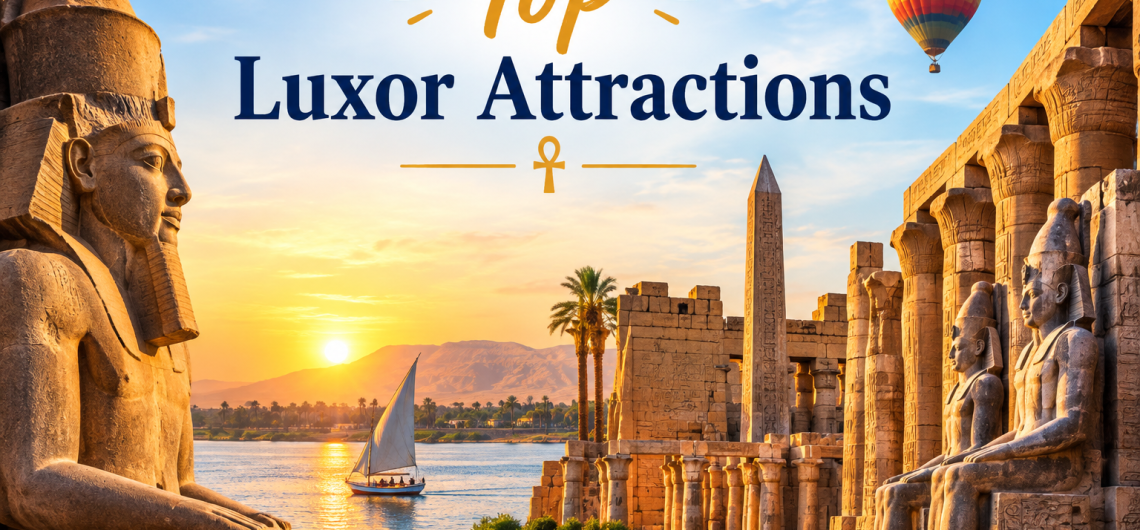
Luxor is one of those rare travel destinations that feels larger than life the moment you arrive. It is not simply a city with famous monuments; it is a living landscape where ancient temples, royal tombs, Nile views, desert edges, and modern street life exist side by side. For many travelers, Luxor becomes the emotional heart of an Egypt trip because it offers such a concentrated experience of history, beauty, and atmosphere. If you have ever imagined standing before colossal statues, walking through giant temple halls, or entering valleys where pharaohs were buried thousands of years ago, Luxor is the place where those images finally become tangible.
The city sits on the banks of the Nile River and was known in ancient times as Thebes, one of the most important cities of the Egyptian empire. Its geography creates a natural division that also mirrors ancient Egyptian beliefs. The East Bank was associated with life, worship, and royal ceremony, while the West Bank was linked to the afterlife, necropolises, and burial sites. This makes Luxor unusually easy to understand: one day you can explore grand temples dedicated to gods and kings, then cross the river the next day and enter a world of tombs, mortuary temples, and dramatic desert cliffs.
What makes Luxor especially appealing is that its major attractions are not scattered across a huge region. Many of the most important sites are within a relatively compact area, which means travelers can experience a surprising amount in just two or three days. You can visit Karnak Temple in the morning, walk around Luxor Temple at sunset, spend a full day in the Valley of the Kings, and still have time for a relaxed felucca ride or a museum visit. That balance of depth and convenience is why Luxor often becomes the highlight of a wider Egypt itinerary.
Luxor is not just a stop on the map. It is a place where time feels layered, where the ancient world is not hidden behind glass but standing beside you in stone, shadow, and silence.
This guide is written for first-time visitors as well as returning travelers who want a clearer way to plan their time. We will walk through the top Luxor attractions, explain what makes each site meaningful, and share practical advice on timing, routes, safety, packing, and overall trip planning. You will also find internal links to related guides on this website so you can connect Luxor to the rest of your Egypt journey, whether you are planning a short cultural stop or a longer route through the country’s most famous landmarks.
Quick Answer: What Are the Top Attractions in Luxor?
The top attractions in Luxor include the Karnak Temple Complex, the Valley of the Kings, the Luxor Temple, the Temple of Hatshepsut, the Colossi of Memnon, the Valley of the Queens, the Valley of the Nobles, and the Luxor Museum. Many travelers also add a sunrise hot air balloon ride for a memorable view over the West Bank. If you only have limited time, prioritize Karnak, Luxor Temple, and the Valley of the Kings, because these three sites capture the essential experience of ancient Thebes.
Why Luxor Should Be at the Center of Your Egypt Trip
Egypt has many famous destinations, but Luxor offers something that even Cairo and the Pyramids of Giza cannot fully replace: immersion in ancient religious and funerary architecture on a monumental scale. The city contains the largest temple complex in the ancient world, the most famous royal necropolis, and some of the best-preserved examples of New Kingdom art and architecture. For travelers who want to understand how ancient Egyptians worshipped, ruled, and prepared for the afterlife, Luxor is one of the clearest places to see those ideas expressed in stone.
Luxor also has a more relaxed pace than Cairo. The city is smaller, greener, and more oriented around the river and tourist sites. You can move between major attractions without spending hours in traffic, and the general atmosphere feels more open and calm. That makes it easier to enjoy the monuments without feeling rushed. Many visitors find that Luxor gives them the best combination of deep historical value and comfortable travel experience.
Another reason Luxor stands out is variety. In one trip, you can visit temple complexes, royal tombs, museums, village landscapes, desert edges, riverfront views, and bustling local markets. You can also combine cultural sightseeing with gentle adventure, such as a balloon ride, a bicycle tour, or a boat trip along the Nile. This variety helps Luxor appeal to different types of travelers, from serious archaeology enthusiasts to families, couples, and casual sightseers looking for things to do in Egypt that feel meaningful rather than generic.
If you are building a wider Egypt route, Luxor usually connects naturally with Cairo, Aswan, and sometimes the Red Sea coast. Many travelers fly into Luxor after visiting Cairo, continue south to Aswan, and then either return north or board a Nile cruise. Because of that central role, it is worth planning Luxor carefully rather than treating it as a quick stop. The more attention you give it, the more rewarding the experience becomes.
A great Luxor day is planned around heat, light, and wonder. The monuments are eternal, but your comfort and timing decide how deeply you feel them.
Best Time to Visit Luxor
The best time to visit Luxor is generally from October through April, when temperatures are more comfortable for outdoor exploration. During these months, you can spend long mornings walking through temple complexes and valleys without facing the extreme heat of summer. Winter is especially popular because the weather is mild, skies are clear, and the light is beautiful for photography. If your schedule is flexible, this season is usually the most enjoyable.
Spring can also be a good choice, particularly March and early April, though temperatures begin to rise. Autumn, especially October and November, is often ideal because the summer heat has faded but the tourist crowds are not yet at their winter peak. For travelers who want a balance of good weather and manageable crowd levels, these shoulder periods are excellent. If you are traveling during these months, our guides to Egypt in October and Egypt in November can help you set expectations.
Summer visits, from June to August, are possible but require more planning. Daytime temperatures can become very high, and midday sightseeing can feel exhausting. If you travel in summer, it helps to start very early, take a long break during the hottest part of the day, and resume activities later in the afternoon. You may also want to rely more on air-conditioned transport and shorter outdoor visits. For broader seasonal guidance, see our article on climate and weather in Egypt and our guide to the best time of year to visit Egypt.
No matter when you visit, Luxor’s main attractions are outdoors, so weather plays a big role in how comfortable your trip feels. The difference between a pleasant morning in November and a scorching afternoon in July can completely change the experience. Planning around the seasons is one of the easiest ways to improve your visit.
In Luxor, the sun is not just weather. It is part of the experience, shaping how you move, how you see the stones, and how deeply the ancient atmosphere settles into your memory.
Is Luxor Safe for Tourists?
Luxor is generally considered safe for tourists, especially in the main archaeological areas, hotels, and popular visitor routes. Egypt relies heavily on tourism, and the government places strong emphasis on security around major sites. Visitors usually feel comfortable exploring the city, particularly when they use reputable guides, licensed transport, and normal travel awareness.
As with any destination, it is smart to stay alert, avoid isolated areas alone late at night, and keep your belongings secure. Most issues travelers encounter are minor, such as aggressive vendors, unofficial guides, or small scams rather than serious safety threats. A little preparation goes a long way. If you want broader guidance before your trip, read our article on whether it is safe to travel to Egypt and our practical guide to tourist scams in Egypt.
One of the best ways to stay safe and comfortable in Luxor is to plan your transport and entry logic in advance. The West Bank, for example, can feel spread out, and having a clear route helps you avoid unnecessary stress. Licensed taxis, hotel transfers, and organized tours are usually the simplest options for first-time visitors. Solo travelers may also benefit from reading our tips for traveling to Egypt alone and our specialized guide for a solo female travel Egypt guide.
How Many Days Do You Need in Luxor?
Two full days is the minimum we recommend for Luxor if you want to see the essential attractions without rushing. One day can cover the East Bank temples, while the second can focus on the West Bank tombs and mortuary temples. This pace allows you to visit the most important sites while still leaving room for meals, rest, and a few spontaneous moments.
Three days is even better, especially if you want to include the Luxor Museum, a balloon ride, a felucca sunset sail, or a slower exploration of Karnak. With three days, you can split the East and West Banks more comfortably and avoid trying to cram too much into a single day. This is often the sweet spot for first-time visitors.
If you are combining Luxor with a Nile cruise or a broader cultural route, four or five days can be very rewarding. Extra time allows you to explore secondary temples, revisit favorite sites at different times of day, or take a relaxed day to absorb the city’s atmosphere. Luxor is one of those places that often feels better when you slow down.
For travelers planning a full Egypt route, Luxor usually fits naturally into a 3-day Egypt itinerary, a 7-day Egypt plan, or a longer route such as a 10-day Egypt itinerary. If you are short on time, even a well-planned two-day stop can leave a strong impression, but three days is ideal for depth.
Luxor East Bank Attractions: Temples of the Living
The East Bank is where ancient Thebes celebrated life, worship, and royal ceremony. This side of the river contains the most important temple complexes, including Karnak and Luxor Temple, as well as museums and riverfront spaces. It is also where most hotels and services are located, making it the practical base for your stay.
1. Luxor Temple
The Luxor Temple is one of the city’s most beautiful and atmospheric sites. Unlike some of the more remote archaeological areas, it sits right in the middle of modern-day Luxor, which creates a striking contrast between ancient stone and everyday urban life. The temple was built largely during the New Kingdom and is associated with the god Amun, as well as with royal ritual and the Opet Festival, an important celebration connected to divine kingship.
Visitors usually begin at the monumental entrance, where colossal statues and pylons set the tone for what lies ahead. As you move inward, the temple opens into courtyards, colonnades, and chapels decorated with reliefs that have survived for thousands of years. The scale is impressive, but what makes Luxor Temple special is the way it feels intimate and walkable. You can move through it gradually and really take in the carvings, columns, and spatial rhythm.
The best time to visit Luxor Temple is late afternoon into evening. As the sun sets, the site takes on a warm golden glow, and the illuminated columns create one of the most memorable scenes in all of Egypt. Many travelers find that seeing Luxor Temple after dark is even more moving than visiting it during the day. The quieter light, cooler air, and dramatic lighting make it feel almost theatrical.
Luxor Temple is also connected to Karnak by the Avenue of Sphinxes, an ancient processional route lined with sphinx statues. Even if you do not walk the full route, learning about it adds depth to your visit. It reminds you that these temples were not isolated monuments but part of a sacred landscape designed for ritual movement and public ceremony.
Luxor Temple at sunset feels like a conversation between two worlds: the modern city moving quietly around it, and the ancient one still standing firm at the center.
2. Karnak Temple Complex
The Karnak Temple Complex is the crown jewel of Luxor and one of the most important archaeological sites in the world. It is not just a single temple but a vast religious city built, expanded, and modified over many centuries. Different pharaohs added courts, halls, obelisks, pylons, and chapels, creating a layered monument that reflects the long evolution of Egyptian power and belief.
The most famous part of Karnak is the Great Hypostyle Hall, a forest of enormous columns that still feels overwhelming even to seasoned travelers. Walking among them gives you a real sense of ancient engineering and ambition. The hall was designed not only as a structural achievement but as a spiritual environment, a place where light, shadow, and scale worked together to inspire awe.
Beyond the hypostyle hall, Karnak contains the Precinct of Amun-Re, areas related to Mut and Montu, sacred lakes, avenues of sphinxes, and countless reliefs. You could easily spend half a day here and still feel you have only seen part of it. Because the site is so large, it helps to decide in advance whether you want a broad overview or a deeper focus on a few areas.
A guided visit to Karnak is especially valuable because the temple is rich with historical detail. Without explanation, it is easy to admire the size but miss the meaning of the scenes, inscriptions, and architectural changes. A good guide can help you connect the stones to real stories of kings, priests, conquests, rituals, and daily religious life.
If you are interested in other temple sites around Luxor, our guide to temples of Luxor can help you compare Karnak, Luxor Temple, and nearby monuments. Together, these sites form the backbone of any serious cultural visit to the city.
Karnak does not ask you to understand it immediately. It asks you to walk through it slowly, look upward, and let the scale rearrange your sense of history.
3. Luxor Museum
The Luxor Museum is a smaller museum than some travelers expect, but it is well worth a visit. Its strength lies in quality rather than quantity. The collection presents royal statuary, reliefs, and artifacts from the Theban region in a clean, thoughtful layout that makes ancient art feel accessible.
After a morning of heat and walking, the museum offers a welcome change of pace. It is air-conditioned, calm, and easy to navigate. More importantly, it helps contextualize what you have seen at the temples and tombs. Statues that may look abstract in situ become more meaningful when displayed with lighting, labels, and comparative pieces.
For many travelers, the museum works best as a midday stop on the East Bank. You can visit Karnak early, take a break at the museum during the hottest hours, and then finish the day at Luxor Temple in the evening. This kind of pacing makes your Luxor experience more comfortable and more memorable. If you enjoy museum visits across the country, our guide to top museums in Egypt can help you plan further stops.
Luxor West Bank Attractions: Tombs, Temples, and the Afterlife
The West Bank is the ancient necropolis side of Luxor, where pharaohs, queens, nobles, and high officials were buried. The landscape is dramatically different from the East Bank: greener in patches, but also edged by desert cliffs and broad valleys. This side of the river feels more solemn, more expansive, and in many ways more emotional than the temple zones.
4. Valley of the Kings
The Valley of the Kings is arguably the most famous attraction in Luxor and one of the most recognized archaeological sites on Earth. Used mainly during the New Kingdom, it contains rock-cut tombs of pharaohs and powerful elites. The idea was to hide royal burials deep in the desert hills, away from tomb robbers, while still providing elaborate decoration for the journey into the afterlife.
What makes the Valley of the Kings so compelling is the contrast between the harsh exterior landscape and the painted interiors of the tombs. Outside, you see dry rock, dust, and heat. Inside, you encounter vivid colors, religious texts, kings descending into the underworld, and scenes designed to protect and empower the deceased. That transition is one of the most powerful experiences in Egypt travel.
Several tombs are open to visitors, and each has its own character. Some are deeper, some better preserved, and some more richly decorated. The tomb of Ramses VI is often appreciated for its quality and accessibility, while the tomb of Tutankhamun carries enormous historical fame even though it is smaller than many expect. Choosing which tombs to visit depends on your interests, but a guided entry can make the experience much richer.
Because the valley involves walking, heat, and confined spaces, it is best visited early in the morning. The light is softer, the crowds are thinner, and the temperature is more manageable. Trying to explore the Valley of the Kings at noon in summer can be uncomfortable and less enjoyable. Timing matters a great deal here.
The Valley of the Kings is also a good reminder that Luxor is not just about monumental temples. It is about belief, death, ritual, and the Egyptian attempt to conquer time through art and architecture. That makes it emotionally resonant in a way that few other sites can match.
The West Bank teaches silence. Beyond the tombs and cliffs, there is a feeling that the ancient Egyptians were not only building for eternity, but speaking to it.
5. Temple of Hatshepsut
The Temple of Hatshepsut, also known as Deir el-Bahari, is one of the most visually striking monuments in Luxor. Built for Queen Hatshepsut, who ruled as pharaoh in her own right, the temple is famous for its terraced colonnades rising against the cliff face. Its architecture feels unusually harmonious, almost modern in its clean lines and integration with the landscape.
Hatshepsut’s story adds depth to the visit. She was not merely a queen consort but a ruler who projected legitimacy, power, and divine favor through monumental building. The temple reliefs depict her birth myth, trade expeditions, religious ceremonies, and claims to authority. For travelers interested in gender, power, and royal propaganda in the ancient world, this site is especially fascinating.
The walk up through the terraces is part of the experience. Each level reveals new views, new reliefs, and a stronger sense of the temple’s relationship to the cliff behind it. Unlike flatter temple complexes, Hatshepsut’s temple feels vertical and sculptural. It is one of the best places in Luxor to appreciate how Egyptian architects used nature as part of their design.
A visit here pairs naturally with the Valley of the Kings and the Colossi of Memnon. Most West Bank itineraries include all three, and doing them in one day is very practical. If you enjoy architectural beauty as much as historical narrative, Hatshepsut’s temple may become one of your favorite stops in Luxor.
Hatshepsut built more than a temple. She built an argument in stone: that power, legitimacy, and legacy could be claimed by a woman pharaoh in a world that expected otherwise.
6. Colossi of Memnon
The Colossi of Memnon are two enormous seated statues of Amenhotep III that stand guard near the entrance to the West Bank necropolis. They are not a tomb or a temple interior, but they are one of Luxor’s most iconic photo stops and an important landmark in understanding the scale of Theban monuments.
What makes the Colossi especially interesting is their survival. They once stood before a much larger mortuary temple complex, most of which has not endured in the same way. Today, the statues remain as powerful fragments of a once-grand setting. Their damaged upper portions and weathered faces tell their own story of time, earthquake, and restoration.
Most visitors stop here briefly, but that short pause can be meaningful. Standing before them gives you a sense of how monumental royal imagery was intended to feel. These were not decorative objects; they were statements of divine kingship, permanence, and awe.
7. Valley of the Queens and Valley of the Nobles
The Valley of the Queens is often overlooked by travelers who focus only on the Valley of the Kings, but it can be one of the most rewarding visits in Luxor. The tombs here belong to queens, princes, and royal family members, and some of the decoration is exceptionally fine. The Tomb of Nefertari, when open, is especially renowned for the beauty and preservation of its painted scenes.
The Valley of the Nobles, meanwhile, offers a different perspective on ancient elite life. These tombs belonged to officials, generals, scribes, and other high-ranking individuals who served the state. Their wall scenes often show daily life, military activity, religious ritual, and personal status in ways that feel more human and immediate than some royal monuments.
Together, these valleys enrich your understanding of Luxor beyond pharaohs alone. They show that the Theban necropolis was a layered social landscape, not just a burial ground for kings. If you have extra time on the West Bank, both are worth considering.
Best Experiences Beyond the Main Sites
8. Hot Air Balloon Ride Over Luxor
A sunrise hot air balloon ride is one of the most memorable ways to see Luxor from above. Floating over the West Bank as the sun rises, you can look down on the Nile, green fields, temple sites, and desert edges all at once. It gives you a geographic understanding of the city that is hard to gain from ground level.
This experience is especially popular because it combines adventure with serenity. The balloon ride itself is relatively gentle, and the views are extraordinary. For photographers, romantics, and travelers who want a once-in-a-lifetime perspective, it is one of the best add-ons to a Luxor itinerary. Couples planning a romantic route may also enjoy our Egypt honeymoon itinerary ideas.
If you choose to do it, book with a reputable operator and confirm pickup logistics in advance. Early wake-up times are normal, but the experience is usually worth it. Many travelers say that the balloon ride is one of the highlights of their entire Egypt trip.
A balloon ride changes scale. From the ground, Luxor feels monumental. From the air, it feels complete, as if the whole ancient city finally reveals its shape.
9. Nile Views, Felucca Rides, and River Time
The Nile is not just scenery in Luxor; it is part of the city’s identity. After spending hours among tombs and temples, taking time by the river can feel restorative. A felucca ride at sunset is one of the simplest and most pleasant ways to end a day in Luxor. The wind, water, and soft light create a calm contrast to the intensity of the archaeological sites.
If your Luxor stop is part of a longer Egypt journey, you may also consider connecting it to a river route. Our Nile cruise itinerary guide explains how Luxor fits into a broader travel pattern between Cairo, Aswan, and temple sites along the river. Even if you are not taking a full cruise, spending time on or near the Nile helps you understand why this region flourished for so long.
The Nile is Luxor’s quiet co-author. Without the river, the temples would lose their context, and the city would lose its rhythm.
10. Day Trips from Luxor to Nearby Temples
If you have extra time, Luxor also works as a base for day trips to some of Upper Egypt’s most impressive temples. The Temple of Edfu is one of the best-preserved temples in Egypt and offers a remarkably complete picture of Ptolemaic religious architecture. The Kom Ombo Temple is unusual because it is dedicated to two gods and has a symmetrical layout that feels almost mirrored.
Farther afield, the Temple of Abydos and the Dendera Temple are among the most rewarding excursions for travelers who want to go beyond the main Luxor circuit. These trips require longer driving hours, but they offer a deeper look at the religious landscape of ancient Egypt. If you are considering them, our Luxor day tours page can help you understand what is realistically possible in a single day.
Practical Tips for Visiting Luxor
What to Pack for Luxor
Packing well can make a big difference in Luxor, especially because much of the sightseeing happens outdoors. Lightweight breathable clothing, a hat, sunglasses, sunscreen, and comfortable walking shoes are essential. The sun can be strong even in cooler months, and temple visits often involve long periods of walking on uneven ground.
A small backpack, reusable water bottle, and power bank are also useful. If you plan to enter tombs or museums, modest and practical clothing is best. For a fuller checklist, see our guide on what to pack when traveling to Egypt.
Good packing is not about luxury. In Luxor, it is about comfort, sun protection, and being able to walk for hours without fighting your own gear.
Budget and Value
Luxor can be visited at many budget levels, from basic hotels to luxury riverside properties. Costs vary depending on season, accommodation, guided tours, entrance tickets, and transport. The good news is that even moderate budgets can access the major attractions, especially if you plan ahead and compare package options carefully.
If you want a broader sense of pricing across the country, our article on Egypt travel costs can help you set realistic expectations. Luxor is often best valued when combined logically with Aswan or a short Nile cruise rather than booked as an isolated expensive add-on.
Tipping, Guides, and Everyday Etiquette
Tipping is part of the travel experience in Egypt, and knowing how to handle it gracefully can make your interactions smoother. Small tips for restroom attendants, drivers, and helpers are common, while guided tours usually involve a separate expectation. If you want clear advice before you go, read our guide to tipping in Egypt.
Guides are especially valuable in Luxor because the sites are historically dense. A good guide can turn stone into story. If you prefer structure and convenience, our Egypt guided tours page can help you compare options.
Traveling to Luxor with Kids or as a Solo Traveler
Luxor can be a wonderful destination for families, especially for children who enjoy tombs, statues, boats, and open spaces. That said, the heat and long walking days require planning. Shorter site visits, frequent breaks, and hydrating stops make a big difference. Our guide on Egypt with kids offers useful family-focused advice.
Solo travelers may also find Luxor rewarding, though it helps to stay organized and choose trusted transport. If you are traveling alone, especially as a woman, our resources on tips when traveling to Egypt alone and the solo female travel Egypt guide can help you feel more prepared.
Visiting Luxor During Ramadan or Special Seasons
If your trip falls during the holy month, it is useful to understand how daily rhythms may change. Fewer restaurants may be open during daylight hours, some sites may have adjusted schedules, and evenings can feel especially lively after iftar. For broader guidance, see our article on Ramadan in Egypt. With a little planning, Luxor remains deeply rewarding even during this season.
Suggested Luxor Itineraries
Perfect 1-Day Luxor Plan
If you only have one day, focus on the essentials. Start early at the Valley of the Kings, then visit the Temple of Hatshepsut and the Colossi of Memnon. In the afternoon, return to the East Bank for Karnak Temple, and finish your day at Luxor Temple after sunset. This is a long day, but it gives you a strong overview of Luxor’s most important sites. For a more structured version, see our Luxor day tours options.
Ideal 2-Day Luxor Plan
With two days, split the city naturally. Day one can be dedicated to the East Bank: Karnak Temple in the morning, Luxor Museum at midday, and Luxor Temple in the evening. Day two can focus on the West Bank: Valley of the Kings early, Temple of Hatshepsut next, Colossi of Memnon, and optionally the Valley of the Queens or Valley of the Nobles. This is the most efficient way to see Luxor without feeling rushed.
Best 3-Day Luxor Plan
Three days allows you to breathe. You can add a sunrise hot air balloon ride, a slower morning at Karnak, a felucca sail on the Nile, or a day trip to Edfu and Kom Ombo. This pace is especially good for travelers who want depth rather than checklist tourism. If you are combining Luxor with other cities, our 4-day Egypt itinerary and 5-day Egypt itinerary guides can help you place Luxor within a larger route.
The best Luxor itinerary is not the one with the most sites. It is the one that leaves room for wonder, rest, and the quiet moments between monuments.
How Luxor Fits Into a Wider Egypt Trip
Luxor rarely exists in isolation within a well-planned Egypt itinerary. Most travelers combine it with Cairo, Aswan, and sometimes Abu Simbel or the Red Sea. From Cairo, you can explore the pyramids and museums, then fly south to Luxor for temples and tombs. From Luxor, continuing to Aswan adds a slower, more scenic southern rhythm to the trip.
If you are interested in the bigger picture, our guide to top 15 landmarks and tourist attractions in Egypt can help you compare Luxor with other national highlights. You may also enjoy our broader article on tourist places in Egypt and our overview of top landmarks.
Luxor also pairs beautifully with Aswan and Cairo. Each city offers a different side of Egypt: Cairo gives you museums and pyramids, Luxor gives you temples and tombs, and Aswan brings Nubian culture, granite landscapes, and a calmer river atmosphere. Together, they form the classic cultural triangle of an Egypt trip.
If you are still deciding how much Egypt to see, our guides to trip to Egypt, trips to Egypt, and holiday to Egypt can help you choose the right balance of culture, comfort, and time.
Luxor rewards travelers who slow down. It is not a place to race through; it is a place to absorb, revisit, and let settle into your memory.
Frequently Asked Questions About Luxor Attractions
What are the must-see attractions in Luxor for first-time visitors?
For first-time visitors, the must-see attractions are Karnak Temple, Luxor Temple, and the Valley of the Kings. These three sites provide the strongest introduction to ancient Thebes. Karnak shows the scale of religious architecture, Luxor Temple offers beauty and atmosphere in the city center, and the Valley of the Kings gives you access to royal burial art and funerary belief. If you have time for one more stop, the Temple of Hatshepsut is highly recommended because of its dramatic setting and historical importance.
Is one day enough in Luxor?
One day is possible but not ideal. With only one day, you will need to choose between the East Bank and the West Bank, or accept a very rushed experience. A single day can cover Luxor Temple and part of Karnak, or it can focus on the Valley of the Kings and Hatshepsut Temple. However, two days is much better because it lets you experience both sides of the river without feeling hurried. If your schedule allows only one day, prioritize Karnak and the Valley of the Kings, then add Luxor Temple in the evening if possible.
Should I visit the East Bank or West Bank first?
Most travelers benefit from starting with the West Bank early in the morning because the Valley of the Kings and other tomb sites are more comfortable before the heat builds. You can then return to the East Bank later in the day and finish at Luxor Temple in the evening. That said, if you arrive in Luxor in the afternoon, visiting Luxor Temple first and saving Karnak for the next morning can also work well. The key is to align your schedule with temperature, crowd flow, and your energy levels.
Do I need a guide in Luxor?
A guide is not legally required for every site, but it is strongly recommended for Karnak, the Valley of the Kings, and the West Bank temples. These places are historically rich, and a good guide helps you understand reliefs, architecture, royal names, religious symbolism, and chronological context. Without interpretation, it is easy to admire the monuments but miss their deeper meaning. If you prefer independence, at least use audio guides or reliable printed maps, and plan your route carefully before arrival.
What is the best time of day to visit Luxor Temple?
The best time to visit Luxor Temple is late afternoon through early evening. The light becomes softer, the heat decreases, and the illuminated columns create a magical atmosphere. Many travelers find the sunset and post-sunset period more memorable than a midday visit. If you want fewer crowds, arriving shortly before closing can also be a good option, though you should check local opening hours before planning your evening.
Are the tombs in the Valley of the Kings worth visiting?
Yes, the tombs in the Valley of the Kings are absolutely worth visiting. They offer a rare chance to see ancient Egyptian funerary art, religious texts, and royal burial spaces in person. The experience is very different from standing outside a temple because you enter intimate painted chambers created for the afterlife. Some tombs are more elaborate than others, but even a few visits can leave a strong impression. If you can, choose tombs with well-preserved decoration and consider combining your visit with the Valley of the Queens or Valley of the Nobles.
Is the hot air balloon ride in Luxor safe and worth it?
When booked with a reputable operator, the hot air balloon ride in Luxor is generally considered safe and is one of the most rewarding experiences in the city. It is worth it if you enjoy panoramic views, photography, and a sense of quiet adventure. The ride gives you a unique perspective over the Nile, temples, and West Bank landscape. It does require a very early start, so it is best suited to travelers who are willing to wake before sunrise. If weather conditions are poor, flights may be canceled for safety, so build some flexibility into your schedule.
What should I wear when visiting Luxor attractions?
Wear lightweight, modest, breathable clothing and comfortable walking shoes. Luxor involves a lot of walking on uneven ground, exposure to sun, and visits to both outdoor temples and enclosed tombs. A hat, sunglasses, and sunscreen are highly recommended. If you plan to enter mosques or more conservative spaces elsewhere in Egypt, modest dress is also useful preparation. For temple and tomb visits, comfort matters more than fashion, so choose shoes that can handle dust, steps, and heat.
Can I combine Luxor with a Nile cruise?
Yes, Luxor is one of the most important stops on a Nile cruise. Many itineraries travel between Luxor and Aswan, with visits to temple sites along the route. A cruise is especially convenient if you want to see Edfu, Kom Ombo, and other landmarks without relying entirely on road transfers. If you are considering this style of travel, our Nile cruise itinerary guide can help you decide how many nights to allocate and which ports matter most. For some travelers, a cruise plus independent time in Luxor offers the best balance of comfort and depth.
What are the most photographed attractions in Luxor?
The most photographed attractions include the Great Hypostyle Hall at Karnak, the avenue and colonnades of Luxor Temple, the terraces of the Temple of Hatshepsut, the Colossi of Memnon, and the views from a sunrise balloon ride over the West Bank. The Valley of the Kings is also highly photogenic, though some tombs restrict photography. If you enjoy landscape and architecture photography, early morning and late afternoon offer the best light. Luxor’s mix of monumental stone, river views, and desert backdrop makes it one of the most visually rewarding destinations in Egypt.
Do I need a visa to visit Egypt before traveling to Luxor?
Most international travelers need a visa to enter Egypt, and requirements can vary by nationality. It is always best to check the latest rules before booking flights or tours. Our guide to the Egypt visa can help you understand the basics and avoid last-minute surprises. Because Luxor is reached by flight, cruise, or overland route from other Egyptian cities, visa planning should be part of your pre-trip checklist.
Is Luxor suitable for families with children?
Yes, Luxor can be excellent for families, especially if you plan shorter visits and build in rest time. Children often enjoy the tombs, giant columns, boat rides, and the feeling of exploring something ancient and mysterious. The main challenges are heat, walking distance, and long travel days. If you are traveling with kids, our guide to Egypt with kids offers practical advice on pacing, comfort, and choosing the right experiences.
Related Words and Topics Around Luxor Attractions
If you are researching Luxor, you may also be searching for terms such as Luxor tourist attractions, best things to do in Luxor, Luxor temples, Valley of the Kings tours, Karnak Temple guide, West Bank Luxor, East Bank Luxor, Luxor day trips, Luxor travel tips, and ancient Thebes attractions. These topics all connect to the same core experience: a city where monumental architecture, royal burial sites, and Nile scenery come together in one remarkably concentrated destination.
- Luxor city guide for an overview of the destination
- Temples of Luxor for deeper architectural context
- Luxor day tours for structured sightseeing options
- Egypt Luxor tours for multi-day and packaged travel
- Best tours of Egypt if you are comparing nationwide operators
Final Thoughts: Making the Most of Luxor
Luxor is not a destination you rush through and forget. It is a place that rewards patience, curiosity, and good planning. The more you understand the difference between the East Bank and West Bank, the more meaningful your visit becomes. Temples, tombs, museums, river views, and even the simple act of watching sunset over the Nile all contribute to a fuller picture of ancient Thebes.
If you only remember a few names, let them be Karnak, Luxor Temple, the Valley of the Kings, and Hatshepsut’s temple. These four sites capture the essence of Luxor. But if you can slow down just a little, add the museum, a balloon ride, or a quiet evening walk, and the city begins to reveal a softer, more human side as well.
For broader travel planning, continue exploring our Egypt travel tips, compare routes in our Egypt itinerary guide, and browse curated options through our all-inclusive Egypt vacation packages. Luxor may be one stop on your journey, but for many travelers, it becomes the memory that lasts the longest.
Luxor does not simply show you ancient Egypt; it places you inside it. The temples, tombs, and river views work together to create a sense of time that stays with you long after the visit ends.
Ready to Experience Luxor Without the Guesswork?
From Karnak’s towering columns to the painted tombs of the Valley of the Kings, Luxor deserves more than a rushed visit. Let us help you plan a route that balances history, comfort, and unforgettable moments along the Nile.