
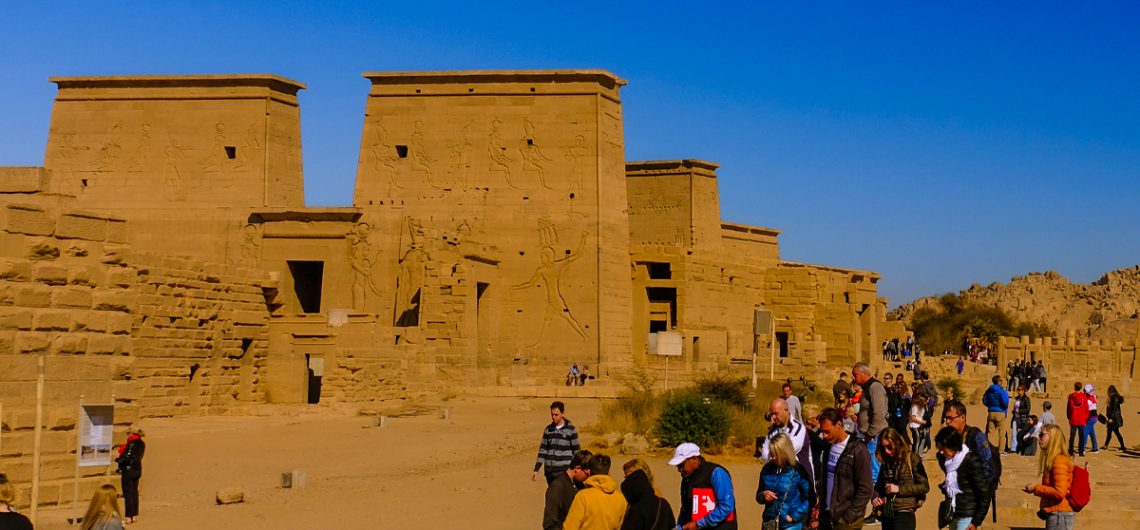
Temples of Aswan stand among the most awe-inspiring ancient monuments on Earth. Carved into sandstone cliffs, rising from sacred islands, and stretching across the timeless landscape of Upper Egypt, these temples carry the weight of thousands of years of civilization. If you are planning a trip to Egypt in 2026, Aswan is not just a destination — it is an experience that changes you. Whether you arrive on a luxury Nile cruise, a carefully crafted one week Egypt itinerary, or a day trip from another city, the temples and archaeological sites of Aswan will leave you speechless.
This guide was written for travelers who want more than a surface-level visit. It covers every major temple, the stories behind them, practical tips for visiting in 2026, and everything you need to plan a journey that truly honors the depth of what Aswan has to offer.
Why Aswan Is the Heart of Ancient Egyptian Civilization in 2026
Aswan sits at the southern gateway of Egypt, where the Nile narrows and the desert heat rises in shimmering waves. For thousands of years, this city was the frontier between Egypt and the land of Nubia — a crossroads of trade, religion, and military power. The pharaohs built temples here not only to honor their gods but to proclaim Egyptian authority to all who passed through. Today, Aswan is a living museum, and visiting its temples is as close as any traveler can get to walking inside the ancient world.
In 2026, Aswan remains one of the most visited and most rewarding destinations along the Nile River. The city itself has grown, but the temples have not changed. The hieroglyphics still cover every wall. The stone carvings still tell the same stories of gods and kings. The sacred atmosphere that once drew pilgrims from across the ancient world still lingers in every corridor and sanctuary.
What makes Aswan especially remarkable is the diversity of its ancient temples. From the Ptolemaic splendor of Philae to the massive rock-cut grandeur of Abu Simbel, from the dual-deity drama of Kom Ombo to the quiet dignity of lesser-known sites like Beit el-Wali and the Temple of Amada, Aswan has something for every kind of traveler. History enthusiasts, photography lovers, spiritual seekers, and adventure travelers all find what they are looking for here.
The Nile River in Aswan is also notably different from other parts of Egypt. It is calmer, dotted with granite boulders and lush green islands. The presence of bodies of water around the temples adds a visual and emotional dimension that photographs can barely capture. Nubian heritage is woven into the fabric of the city, adding a cultural richness that makes Aswan feel distinct from Cairo or Luxor.
If you are building your Egypt vacation packages or planning an Egypt cultural tour, make sure Aswan receives at least two to three full days on your itinerary. Some travelers even use Aswan as their base for several days, making day trips to Abu Simbel and other sites. Given the scale and significance of what is here, that is not excessive — it is wise.
Philae Temple: The Sacred Island of Goddess Isis
No temple in all of Egypt tells a more romantic story than the Temple of Philae. Located on Philae Island — or more precisely, since the construction of the Aswan High Dam, on the nearby Agilkia Island — this extraordinary complex was dedicated to the goddess Isis, one of the most beloved and powerful deities in all of Egyptian mythology.
The temple of Philae Aswan dates primarily to the Ptolemaic period, though construction continued into the Roman era. What visitors see today is a stunning collection of pylons, hypostyle halls, sanctuaries, and colonnades that blend Egyptian and Greco-Roman architectural styles in a way that feels both foreign and deeply familiar. The Aswan temple of Isis draws tens of thousands of visitors each year, and it is easy to understand why.
To reach the temple, you board a small motorboat from the Shellal dock and glide across the reservoir water. The moment the island comes into view, rising from the water with its ancient towers reflected in the surface below, time seems to shift. Arriving by water was exactly how ancient pilgrims would have approached this sacred place thousands of years ago. The experience is unchanged, and that continuity is part of what makes Philae so powerful.
The significance of Aswan’s Philae Temple cannot be overstated. It was one of the last places in Egypt where the ancient Egyptian religion was practiced. Priests continued to conduct rituals here well into the sixth century CE, long after Christianity had taken hold in the rest of Egypt and the Roman Empire. This makes Philae unique: it is not just a monument to a lost faith, it is the final sanctuary of one of history’s greatest religions.
Inside the temple, the walls are covered with magnificent reliefs depicting the legend of Osiris and Isis — how Isis searched for the scattered body of her murdered husband, reassembled him, and conceived Horus, the falcon god. These scenes explain why Philae was so sacred: it was believed to be the burial place of Osiris himself. Walking through these halls is like reading the most ancient love story ever told.
The Philae Temple also hosts a spectacular Sound and Light Show in the evenings, where the stones glow in colored light and the story of the temple is narrated dramatically. This is one of the finest evening experiences in all of Egypt.
If you want to explain the significance of Aswan’s Philae Temple to a traveling companion, tell them this: it is a place where myth, history, love, and faith all converge in one of the most beautiful settings imaginable. No traveler should leave Aswan without visiting it.
Abu Simbel Temples: Pharaoh Ramses II and the Monument That Moved the World
Two hundred and eighty kilometers south of Aswan, sitting on the banks of Lake Nasser — one of the most dramatic lakes in Egypt — the Abu Simbel Temples represent one of the greatest achievements in the history of human civilization. Built by Pharaoh Ramses II during the New Kingdom Egypt period around 1264 BCE, these two massive rock-cut temples are dedicated to Ramses himself and to his beloved queen, Nefertari.
The Great Temple of Abu Simbel features four enormous seated colossi of Ramses II carved directly into the cliff face, each standing over 20 meters tall. Inside, a series of halls lead to the inner sanctuary, where, twice a year on specific dates, sunlight penetrates the entire length of the temple to illuminate the statues of the gods — except for the statue of Ptah, god of darkness, who remains in shadow. This solar alignment was engineered with breathtaking precision more than three thousand years ago.
What makes the Abu Simbel Temples even more extraordinary is their modern story. When the construction of the Aswan High Dam threatened to submerge them beneath the rising waters of Lake Nasser, UNESCO and the Egyptian government launched one of the most complex archaeological rescue operations ever attempted. Between 1964 and 1968, the temples were cut into more than two thousand blocks and reassembled on higher ground, preserving them for all future generations. This achievement is why Abu Simbel holds a place among the most celebrated UNESCO heritage sites on Earth.
An Abu Simbel day trip from Aswan is one of the most popular excursions in Egypt for good reason. Most travelers choose either a short flight, which takes about 45 minutes, or an early-morning road convoy through the desert. Both options deliver you to a site of staggering scale and beauty. The smaller temple, dedicated to Nefertari and the goddess Hathor, is equally magnificent and stands as one of the finest tributes any pharaoh ever offered to a queen.
For travelers on a one week Egypt itinerary, an overnight stay near Abu Simbel allows you to witness both the sunrise over the temples and the evening light fading across Lake Nasser. The lake itself is one of the largest lakes in Egypt, stretching over 500 kilometers and forming a massive inland sea on the southern edge of the country.
The temple inscriptions and stone carvings at Abu Simbel are among the best-preserved examples of New Kingdom Egyptian art anywhere in the world. The battle scenes from the Battle of Kadesh cover entire walls, showing Ramses charging into battle in his chariot, cutting down enemies, and returning in triumph. Whether these scenes are historically accurate is beside the point — they are extraordinary works of art and propaganda, created by one of history’s most powerful rulers to cement his legacy for eternity.
Temple of Kom Ombo: Where Two Gods Shared One House
The Temple of Kom Ombo occupies one of the most dramatic positions of any temple along the Nile River. It sits directly on the eastern bank of the Nile, about 48 kilometers north of Aswan, with its columns and pylons rising above the water line so that passengers on a Nile River cruise can see it from their deck long before they arrive.
What makes Kom Ombo architecturally and theologically unique is its dual design. The temple was built to honor two gods simultaneously: God Sobek, the crocodile deity associated with fertility and the power of the Nile, and Haroeris, a form of God Horus the Elder, associated with healing and kingship. As a result, the entire temple is essentially two mirror-image temples merged into one building. Every hall, every sanctuary, every decorative scene has a counterpart on the other side dedicated to the other god.
Visiting Kom Ombo in 2026 is an experience full of unexpected details. The temple contains what archaeologists believe to be the earliest known depiction of surgical instruments, carved into the stone walls — forceps, scalpels, and other tools that suggest the ancient Egyptians had a far more sophisticated understanding of medicine than many people realize. There is also a small museum on the site dedicated to the mummified crocodiles that were found in the area, once sacred animals kept in pools near the temple.
The position of Kom Ombo means it is almost always visited as part of a Nile cruise itinerary, typically in the late afternoon when the light turns golden and the reflections on the river are at their most beautiful. This timing is not accidental — experienced tour operators know that Kom Ombo at sunset is a visual experience unlike anything else in Egypt.
The columns of Kom Ombo are exceptionally well-preserved and still display vivid traces of their original paint and carved reliefs. Scenes show the pharaohs making offerings to Sobek and Horus, receiving blessings in return, and performing ritual purification ceremonies. For anyone interested in Egyptian mythology or the theological complexity of ancient Egyptian religion, Kom Ombo is a revelation.
Temple of Kalabsha: Nubia’s Forgotten Masterpiece
Among the ancient temples in Aswan that many visitors overlook, the Temple of Kalabsha deserves far more attention than it typically receives. Originally built during the reign of Augustus Caesar near the ancient Nubian town of Talmis, this temple was dedicated to the Nubian solar god Mandoulis. Like Philae, it was relocated during the UNESCO rescue operation of the 1960s and now stands near the Aswan High Dam, accessible by boat from the west bank.
The Nubian heritage embedded in Kalabsha is palpable. The temple’s iconography blends traditional Egyptian religious imagery with Nubian artistic traditions, creating a visual language that is distinct from purely Egyptian temples further north. The reliefs show Augustus in full pharaonic regalia, making offerings to the gods — a reminder that the Ptolemaic and Roman rulers of Egypt adopted Egyptian religion enthusiastically to legitimize their rule.
Kalabsha is larger than it might appear from a distance. Its entrance pylon is impressively preserved, and the inner sanctuary retains some striking carved scenes. The site is typically quiet, visited by far fewer tourists than Philae or Abu Simbel, which means those who make the effort to see it enjoy a more contemplative experience. This is the kind of place where you can stand in the inner sanctum and genuinely feel the weight of centuries.
Nearby, two other small but historically significant temples — the Kiosk of Qertassi and the rock temple of Beit el-Wali — complete a cluster of ancient monuments that tell the story of Nubia’s deep entanglement with Egyptian civilization and empire.
Temple of Beit el-Wali: Ramses II’s Earliest Monument
The Temple of Beit el-Wali holds a special place in the study of New Kingdom Egypt because it is believed to be one of the earliest temples built by Pharaoh Ramses II, constructed early in his reign before he had fully developed the monumental style for which he later became famous. This rock-cut temple was also relocated during the UNESCO salvage operation and now sits near Kalabsha.
The reliefs at Beit el-Wali are among the most lively and dynamic in all of ancient Egyptian art. Battle scenes show Ramses II fighting against the Nubians and Syrians, leading his troops in chariots, accepting tribute from defeated enemies, and presenting his victories to the god Amun. These scenes are notable not only for their historical content but for the narrative energy and detail in the carving — horses rear dramatically, figures tumble in defeat, and the young pharaoh towers over the chaos of battle.
Visiting Beit el-Wali today offers a fascinating contrast to the overwhelming scale of Abu Simbel. Here, in a small rock-cut chamber, you can stand just centimeters from stone carvings that a master craftsman carved over 3,200 years ago. The intimacy is remarkable, and for many travelers it proves to be one of the most emotionally resonant moments of their Egypt trip.
Temple of Amada: The Oldest Standing Temple in Nubia
Located further south, near Abu Simbel, the Temple of Amada is the oldest surviving temple in Nubia and one of the finest examples of New Kingdom Egyptian architecture and painting. Built during the reigns of Thutmose III and Amenhotep II, the temple is dedicated to the gods Amun-Ra and Ra-Horakhty.
What makes Amada exceptional is the extraordinary state of preservation of its painted reliefs. The colors — deep blues, rich ochres, vibrant reds — are astonishingly vivid. Many of the scenes appear almost freshly painted, despite being over 3,400 years old. This is partly because the temple was buried under sand for much of its history, protecting its decorated surfaces from the elements.
Amada also contains important historical inscriptions, including records of military campaigns conducted by Amenhotep II and Merenptah that provide scholars with crucial evidence about events during the New Kingdom period. For those interested in Egyptian archaeology at a serious level, Amada is an essential destination.
Like many sites in this region, the Temple of Amada was relocated as part of the Lake Nasser rescue mission, moved on rails over 2.5 kilometers to its current position.
Practical Tips for Visiting Aswan Temples in 2026
Planning a visit to the Aswan temples requires some preparation, particularly if you want to include Abu Simbel and the more distant sites around Lake Nasser. Here are the key practical considerations for 2026:
Best Time to Visit: The optimal months for visiting Aswan are October through April, when temperatures are manageable. Summer in Aswan is extreme — daytime highs regularly exceed 45°C (113°F). If visiting in the shoulder season of October or March, go early in the morning to avoid the worst of the midday heat.
Getting to Aswan: Aswan is served by an international airport with direct connections from Cairo and several European cities. Train travel from Cairo, Luxor, or other cities along the Nile is also an excellent option and offers scenic views of the Nile Valley. Many travelers arrive by boat, either on a luxury Nile cruise from Luxor or as part of an organized Egypt historical tour.
Combining Sites: The most efficient way to see all major Aswan temples is to combine a Nile cruise (which naturally stops at Kom Ombo and Edfu en route to Aswan) with dedicated excursions to Philae, Kalabsha, and an Abu Simbel day trip from Aswan. This structure typically requires a minimum of three full days in the Aswan area.
Guided Tours vs. Independent Travel: While it is technically possible to visit many of these temples independently, hiring a knowledgeable local guide dramatically enriches the experience. The stories behind the hieroglyphics, the theological significance of specific scenes, and the historical context that brings these temples to life are best explained by someone who has dedicated years to studying them. Our Egypt cultural tours include expert-guided visits to all major sites.
Photography: All Aswan temples are highly photogenic, but certain times of day produce extraordinary results. Philae is stunning in golden hour light just before sunset. Abu Simbel is best photographed in early morning light. Kom Ombo is magical at sunset. Plan accordingly.
How to Reach Aswan: Entry Requirements and Regional Access
For international travelers in 2026, entering Egypt is straightforward. Most nationalities can obtain a tourist visa on arrival at Cairo, Luxor, and Aswan airports. Several nationalities also qualify for an Egypt visa on arrival (sometimes referred to as egypt voa), making entry exceptionally convenient. Travelers arriving from Europe — including those exploring a Cyprus to Egypt route or looking into a mini cruise from Cyprus to Egypt — will find well-established connections with regular flights and cruise lines.
A Cyprus to Egypt day trip or longer itinerary connecting the two countries is increasingly popular among Mediterranean travelers. Several operators run organized tours that combine Cyprus beach relaxation with Egypt cultural immersion, and Aswan is often the highlight of the Egyptian portion of such trips.
For travelers already in Egypt, Aswan is most commonly reached via a connecting flight from Cairo, which takes approximately 90 minutes, or by train from Luxor, which takes about three to four hours. The best way to combine Aswan with other Egyptian highlights is through a well-planned one week Egypt itinerary that typically includes Cairo and the Pyramids, Luxor’s temples and tombs, and Aswan with its extraordinary collection of ancient sites.
If you are wondering about the best area to stay in Hurghada before heading south to Aswan, the downtown area near the marina offers good connections and convenient access to domestic flights. However, for a fully immersive Egypt experience, basing yourself in Aswan itself, particularly in a Nile-facing hotel, is the most rewarding choice.
Siwa and Egypt’s Lakes: A Broader Natural Context
No comprehensive picture of Egypt is complete without acknowledging the country’s extraordinary natural landscape. Beyond the Nile, Egypt contains several remarkable lakes in Egypt that add geographic and ecological context to any travel experience. The famous Siwa salt lakes — visible on any Siwa Egypt salt lakes map or Siwa lake maps — are located in the Siwa Oasis in the Western Desert, far from Aswan but worth noting for travelers who want to explore beyond the Nile corridor.
Bodies of water in Egypt also include Lake Nasser, the vast artificial reservoir created by the Aswan High Dam that now dominates the landscape south of Aswan. On a lakes in Egypt map, Lake Nasser appears as one of the country’s largest geographic features, stretching south into Sudan and providing the backdrop against which the rescued temples of Nubia now stand. The view across Lake Nasser from Abu Simbel at sunrise, with the desert silence broken only by birdsong, is one of the most tranquil and moving experiences Egypt can offer.
The Gods of Aswan’s Temples: Understanding Ancient Egyptian Mythology
To truly appreciate the temples of Aswan, it helps to understand the divine figures who inhabit them. Egyptian mythology is rich and complex, but a basic familiarity with the key gods makes every inscription and relief immediately more meaningful.
Goddess Isis is the central figure at Philae — the devoted wife, the powerful magician, the mourning mother, and the divine healer. Her story of love, loss, and resurrection resonates across cultures and millennia. Her temple at Philae was the last stronghold of her worship in Egypt.
God Horus, the falcon-headed son of Isis and Osiris, represents kingship, sky, and protection. Every pharaoh was considered a living embodiment of Horus, which is why royal temples across Egypt are filled with images of the falcon god. At Kom Ombo, Haroeris (Horus the Elder) shares divine authority with Sobek.
God Sobek, the crocodile deity, was associated with the Nile’s fertility and power. Feared and revered simultaneously, Sobek represented the dangerous creative energy of the river. His presence at Kom Ombo reflects the centrality of the Nile to Egyptian civilization — a river that gave life but could also destroy it.
Pharaoh Ramses II, while not a god in the conventional sense, was worshipped as divine during his own lifetime — particularly in Nubia, where his temples at Abu Simbel and Beit el-Wali served as expressions of royal divinity. His image appears on temple walls across Aswan with a frequency and confidence that reflects his extraordinary 66-year reign.
Understanding these figures transforms a visit to Aswan’s temples from a sightseeing trip into an encounter with one of history’s most sophisticated religious and philosophical traditions.
Why Book Your Aswan Temple Tour Through a Professional Travel Agency
Traveling to the temples of Aswan independently is possible, but working with an experienced Egypt travel agency gives you access to knowledge, connections, and logistics support that simply cannot be replicated on your own. In 2026, with visitor numbers at many sites carefully managed to protect the ancient structures, having an expert handle your bookings ensures you do not miss critical entry windows, especially at Abu Simbel and Philae.
Our Egypt vacation packages are designed specifically to give travelers the richest possible experience of Aswan’s archaeological treasures. We offer luxury Nile cruise options that combine comfort with expert-guided visits to every major temple, as well as more budget-conscious tours that prioritize depth of experience over luxury amenities. For travelers interested in Egypt adventure tours, we also offer early-morning hot air balloon flights over Luxor before transferring south to Aswan — a perspective on the Nile Valley that no ground-level visit can match.
Our team includes certified Egyptologists, experienced local guides, and logistics experts who know the road to Abu Simbel, the boat schedules for Philae, and the quietest times to visit Kom Ombo. We handle everything from your Egypt visa on arrival paperwork to transfers, accommodation, and specialist site access.
For travelers coming from Cyprus or other parts of Europe, we offer customized itineraries that combine a Cyprus to Egypt connection with a carefully crafted journey through Upper Egypt. Whether you have one week or three, we build the itinerary around what matters most to you.
Final Thoughts: Aswan’s Temples Are Unlike Anywhere Else on Earth
The Temples of Aswan represent the summit of ancient Egyptian civilization’s achievement in stone, paint, and myth. They are not ruins in the way that word is sometimes used — as if something is broken or diminished. They are presences. Standing inside Philae’s sanctuary, looking up at reliefs of Isis with outstretched wings, or watching the sun rise over the colossi of Abu Simbel while the desert is still cool and the sky turns from deep violet to gold — these are the moments that travelers carry with them for the rest of their lives.
In 2026, with Egypt’s tourism infrastructure more developed than ever and new lighting and conservation systems at many sites enhancing the visitor experience, there has never been a better time to make this journey. The ancient temples in Aswan are waiting. The Nile is still flowing. The hieroglyphics are still carved into the stone, telling the same eternal stories they have told for thousands of years.
The only question is: when will you go?
Ready to plan your journey to the Temples of Aswan? Contact us today to explore our Egypt historical tours, Nile cruise packages, and fully customized itineraries designed to make your trip to Egypt unforgettable. Our team is standing by to help you build the perfect experience — one that does justice to everything Aswan has to offer.

